Today, we celebrate the 12th Sunday in Ordinary Time. The readings continue Jesus’ teaching on missionary discipleship. As His disciples, we are called to remain faithful despite the many temptations and distractions that the world places before us—temptations that slowly weaken our commitment to Christ.
In the first reading, the Prophet Jeremiah expresses his unwavering confidence that the Lord will protect and defend him, even against his enemies. What is striking is that some of those he could not fully trust were people close to him. Those who should have supported him sometimes became a source of temptation, drawing him away from God’s will.
The same can happen in our own lives. There are moments when even our friends, without intending to, can make us lukewarm in our relationship with God. They may invite us to activities that cause us to neglect our obligation to worship God on Sunday. It may be an invitation to travel, to spend the day elsewhere, or even to play pickleball rather than attend Mass. None of these activities is wrong in itself, but they become harmful when they gradually replace God and our commitment to Him.
Sometimes we also allow the opinions of others to prevent us from doing what we know is right. Little by little, we become hesitant to practice our faith. Instead of influencing others by our Christian witness, we begin conforming to a culture that resists God and rejects His ways.
Like Jeremiah, however, we are invited to proclaim with gratitude:
“Praise the Lord, for he has rescued the life of the poor from the power of the wicked.” (v.13) Jeremiah reminds us that what ultimately matters is not what other people think of us, but what God thinks of us.
In the second reading, St. Paul teaches that sin entered the world through one man, but salvation came through the one Savior, Jesus Christ. If sin has affected humanity, Christ’s grace is even greater. Therefore, let us place our complete trust in Jesus. Let Him become the center of our lives, for He alone leads us to the Father and to eternal life.
In today’s Gospel from St. Matthew, Jesus prepares the Twelve for the difficult mission that lies ahead. He knows that they will encounter rejection, persecution, and even death. Yet before sending them out, He offers them words of consolation and courage.
There are four important lessons that Jesus teaches us.
First, do not be ashamed to witness to your faith. After accompanying Jesus throughout His ministry, the disciples are now sent out to preach on their own. Naturally, they are anxious and afraid. They wonder whether they are ready for such a mission.
We experience the same fear today. Many Catholics hesitate to speak openly about their faith. Some are reluctant even to identify themselves as Catholics because they fear criticism, ridicule, or rejection.
Jesus tells us not to hide our faith but to “proclaim it from the housetops.” We should never be ashamed of belonging to Christ. Rather, we should know our faith, celebrate it with joy, and live it with conviction. A parish truly becomes alive when its members know the faith, celebrate the faith, and faithfully live the faith.
Second, do not fear those who can only take away your earthly life. Three times in this Gospel Jesus repeats the words, “Do not be afraid.” He knows that His disciples are not only afraid of preaching; they are afraid of persecution and martyrdom. Isn’t fear of death natural? Of course it is. Yet Jesus invites us to see life from a different perspective.
Anyone who follows Christ must be prepared to walk the road that leads to Calvary. Discipleship always involves sacrifice. Whether or not we are called to shed our blood, every Christian is called to die daily to selfishness, comfort, pride, and sin. Jesus reminds us that our earthly life is temporary, but the life He promises is eternal. Therefore, it makes far more sense to risk everything for Christ than to cling to a life that eventually passes away. Our hope is not simply to live longer on earth but to live forever with God.
Third, trust completely in God’s loving providence. Jesus tells His disciples that those who can harm the body do not possess ultimate power. God alone is Lord of life.
Persecution and suffering cannot always be avoided, but Jesus assures us that not even a sparrow falls to the ground without the Father’s knowledge. If God cares even for the smallest of His creatures, how much more does He care for His beloved children?
Whatever trials we face, God never abandons us. His loving providence accompanies us every step of the way.
Fourth, fear sin more than suffering. Jesus says, “Fear him who can destroy both soul and body in Gehenna.”
At first these words may sound frightening, but Jesus is teaching us about the proper kind of fear. We naturally fear physical death because it ends our earthly life. Yet how often do we fail to fear something far more serious—the death of the soul through sin?
Spiritual death means separation from God. Jesus teaches us that this is the tragedy we should fear most. Nothing—not suffering, rejection, or even death is worse than losing our communion with God.
Therefore, as we proclaim the Gospel, there is ultimately nothing to fear. Even if our earthly life is threatened, our souls belong to God, and He has prepared for us an everlasting kingdom.
We know that the world in which we live is filled with uncertainty. Life is fragile. Tragedies happen unexpectedly. Violence, sickness, poverty, and injustice remind us that this world is far from perfect. It is only natural to experience fear.
Yet Jesus repeatedly says, “Have no fear.”
Why? Because He is Lord. He remains in control even when circumstances seem beyond our control. He invites us to see life not merely from an earthly perspective but from God’s eternal perspective. We are pilgrims in this world, but our true homeland is in heaven.
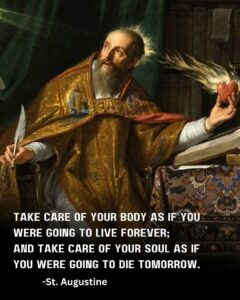
St. Augustine beautifully reminds us: “Take care of your body as if you were going to live forever; and take care of your soul as if you were going to die tomorrow.”
Finally, when Scripture speaks about the fear of the Lord, it does not mean being terrified of God as though He were an angry judge waiting to punish us. Rather, it is the reverent fear that grows out of love—the fear of offending the One who loves us so deeply.
It is the fear of sin because sin wounds our relationship with God. It is the fear of breaking the covenant that Christ established with us through His saving death and resurrection.
Indeed, as the Book of Proverbs reminds us, “The fear of the Lord is the beginning of wisdom.”
Jesus is inviting us to exchange our earthly fears for a holy fear—the fear of losing God’s friendship. When we love God above all else, the fears of this world begin to lose their power over us.
May we therefore live with courage, proclaim our faith without shame, trust completely in God’s providence, and remain faithful to Christ until the day He welcomes us into His eternal kingdom.
Blessings to all.
Fr. Arlon, OSA