The Dictate of the Heart: 5th Sunday of Easter, Year A

  • Acts 6:1–7
  • Psalm 33
  • 1 Peter 2:4–9
  • John 14:1–12

    We continue to rejoice on this 5th Sunday of Easter. Yet, if we are honest with ourselves, many of us remain at the level of amazement rather than allowing a true transformation of the heart. We are easily distracted—by politics that divide, wars that isolate, and economic pressures that distress us. These disturbances often fill our hearts with anxiety instead of the deep and lasting joy that Easter brings. And yet, the readings today gently inspire and strengthen us. Like the Apostles, who remained committed to preaching despite their struggles, we are reminded that God continues to work, and the community of believers continues to grow.

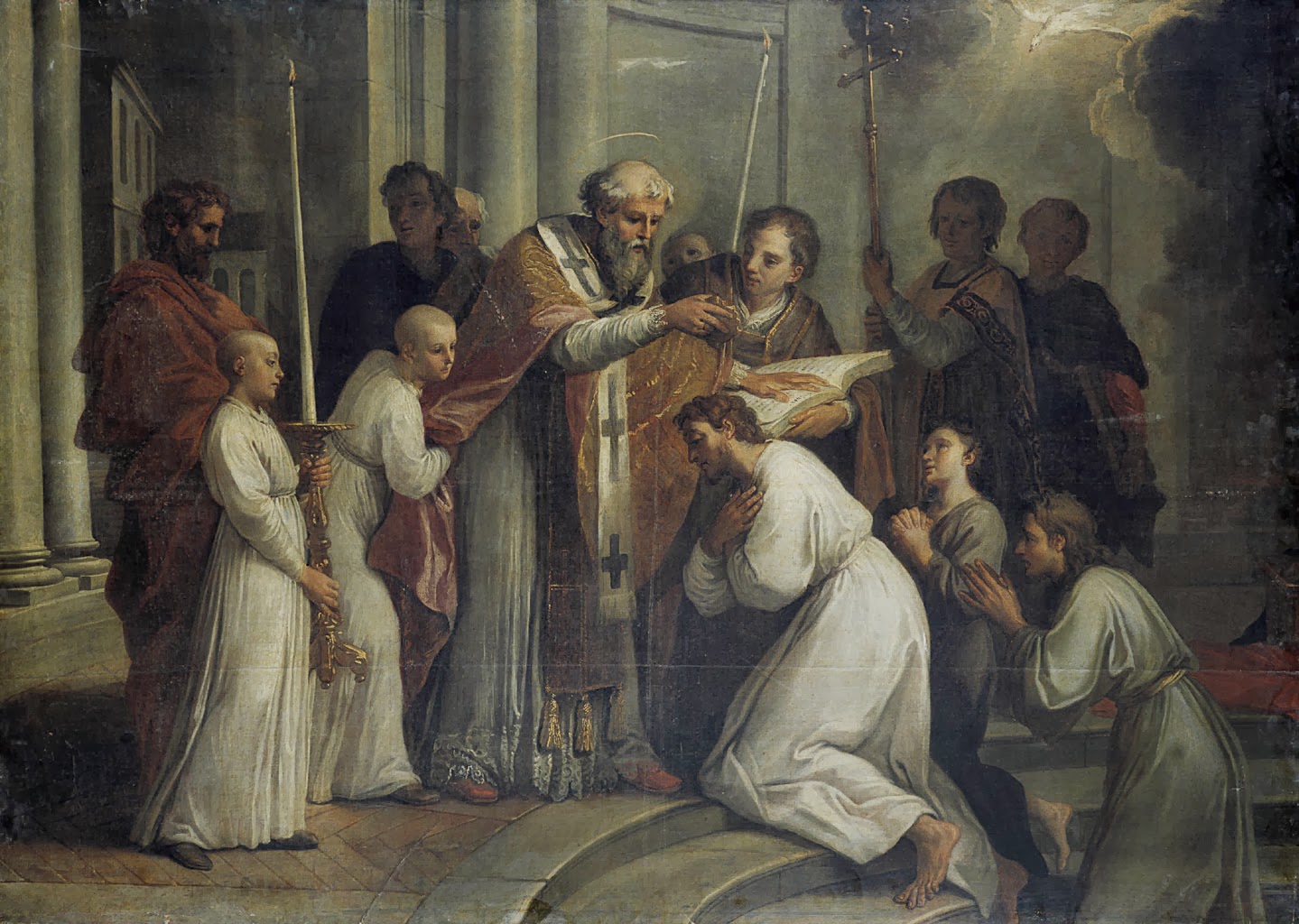
    In the first reading from the Acts of the Apostles, we see the early Church facing internal challenges. There were tensions and concerns within the community, yet through discernment, humility, and cooperation, they remained faithful to their mission. Their commitment to prayer and service allowed the Word of God to spread, and the number of disciples increased. It is a quiet reminder to us that even our own difficulties, when entrusted to God, can become opportunities for growth.

    In the second reading, St. Peter reminds us that we are a holy people, a spiritual family formed by God. United with the risen Christ, we are called to offer spiritual sacrifices acceptable to Him. This is both our dignity and our calling—to live as people gradually transformed by His love. Sometimes we forget this identity, yet the Lord never forgets who we are in His eyes.

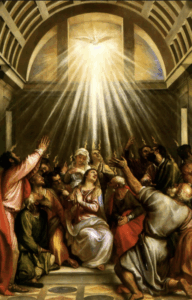
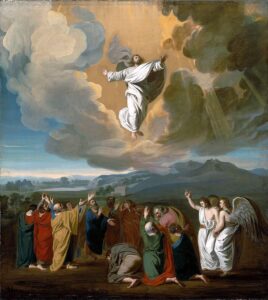
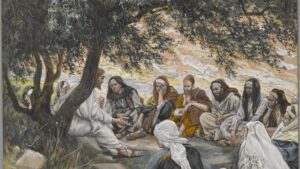
    The Gospel today, taken from John, shifts our attention. Unlike the previous Sundays filled with Resurrection appearances, we are brought back to Jesus’ intimate words during the Last Discourse. At first, these may sound like farewell words, but in the light of Easter, they become words of promise. They lead us toward the Ascension and gently open our hearts to Pentecost.

    Allow me to reflect on a few important points from this Gospel.

    First, the disciples are searching for understanding when Jesus speaks of going away. They are confused, and Thomas expresses this honestly: “Master, we do not know where you are going. How can we know the way?” In many ways, Thomas speaks for all of us. There are moments in our lives when we feel uncertain, when God’s plans are not clear, and when His words seem difficult to grasp. Like the disciples, we sometimes hear but do not fully understand; we see but do not fully believe. It was only after the Resurrection that the apostles began to comprehend and truly believe that Jesus is the Son of God. In our own lives, understanding also comes slowly—through prayer, through experience, and through staying close to Him.

    Second, the mystery of the Incarnation remains beyond our full comprehension. But perhaps it is not the “how” that should trouble us. With God, all things are possible. The more important question is “why.” Why did God choose to come so close to us? Why does He continue to reach out to us? The answer lies in His infinite goodness and love. When we encounter genuine love in our lives, we begin to glimpse something of God’s love. And yet, we often overlook this truth—that God has reached out to us in the most profound way. Despite our weaknesses, our mistakes, and our failures, His love continues to triumph. In giving us His Son, He reveals how deeply we are loved and how blessed we truly are. If we take this to heart, it can slowly change the way we see ourselves and others.

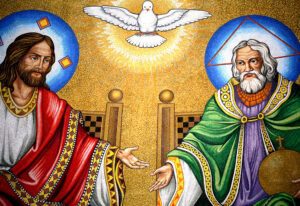
    Third, Jesus challenges His disciples: “How can you say, ‘Show us the Father’?” He responds, “I am in the Father and the Father is in me.” These words may seem difficult, but they are also clear and deeply personal. To know Jesus is to know the Father. To believe in Him is to share in His life and mission. He invites us into this relationship—to remain in Him as He remains in the Father. And then He makes a remarkable promise: “Whoever believes in me will do the works that I do, and even greater ones.” This is both a challenge and a call to commitment. Our faith cannot remain passive or superficial; it must be lived each day—with gratitude, with trust, and with quiet fidelity in the ordinary moments of life.

    Fourth, Jesus does not give the disciples a direction or a plan in the usual sense. Instead, He points to Himself: “I am the way and the truth and the life.” He is not offering a “GPS , Global Positioning System ” or a set of instructions, but inviting us into a relationship. In Him, the invisible God becomes visible. What seems distant becomes near. What seems unknowable becomes known through love. And perhaps this is where our hearts are gently led—to trust not in our own understanding, but in His presence.

    We can only imagine how the early Christians struggled to understand and express this mystery. Even before doctrines were fully defined, the Holy Spirit was already guiding them as a community, leading the Church forward in faith. In the same way, the Spirit continues to guide us today, even when we do not fully understand the path before us.

    And so, my dear brothers and sisters, we are invited to respond in simple but meaningful ways: through small acts of love, quiet expressions of gratitude, and a willing acceptance of the crosses we carry each day. These may seem small, but they purify our hearts and draw us closer to Christ.

    Let us hold on to His words: “Do not let your hearts be troubled. You have faith in God; have faith also in me.”

    May we continue to grow as a Church—like the early Christians—filled with the Spirit, rooted in prayer, and faithful in service.

    God bless you.

    Fr. Arlon, OSA


Ang Diktado sa Kasingkasing: Ika-5 nga Domingo sa Pasko sa Pagkabanhaw, Tuig A

  • Mga Buhat 6:1–7
  • Salmo 33
  • 1 Pedro 2:4–9
  • Juan 14:1–12

    Padayon kitang nagmaya niining ika-5 nga Domingo sa Pasko sa Pagkabanhaw. Apan kon atong tan-awon pag-ayo ang atong kaugalingon, daghan kanato nagpabilin pa lamang sa kahibulong ug wala pa gyud makaabot sa tinuod nga kausaban sa kasingkasing. Sayon ra kaayo kitang madistract—sa politika nga nagbahinbahin, sa mga gubat nga nagpalayo kanato sa usag usa, ug sa kalisod sa ekonomiya nga naghatag ug kabalaka. Kining mga butanga kasagaran mopuno sa atong kasingkasing ug kahadlok ug kabalaka imbis nga kalipay nga dala sa Pasko sa Pagkabanhaw. Bisan pa niana, ang mga pagbasa karon nagdasig ug nagpalig-on kanato. Sama sa mga Apostoles nga nagpabiling matinud-anon sa ilang misyon bisan pa sa ilang mga pagsulay, gipahinumduman usab kita nga ang Dios padayon nga naglihok ug ang komunidad sa mga magtutuo padayon nga motubo.

    Sa unang pagbasa gikan sa Mga Buhat sa mga Apostoles, atong makita ang unang Simbahan nga nag-atubang ug sulodnong mga hagit. Adunay mga tensiyon ug panaglalis sulod sa komunidad, apan pinaagi sa pag-ila sa kabubut-on sa Dios, pagpaubos, ug panaghiusa, nagpabilin silang matinud-anon sa ilang misyon. Ang ilang paghatag og bili sa pag-ampo ug pag-alagad maoy hinungdan nga mikaylap ang Pulong sa Dios ug midaghan ang mga tinun-an. Usa kini ka pahinumdom kanato nga bisan ang atong mga kalisdanan, kon itugyan nato sa Dios, mahimong dalan sa pagtubo.

    Sa ikaduhang pagbasa, gipahinumduman kita ni San Pedro nga kita usa ka balaang katawhan, usa ka espirituhanong pamilya nga gihimo sa Dios. Nahiusa kita kang Kristo nga nabanhaw, ug gitawag kita sa paghalad ug espirituhanong mga halad nga makapahimuot sa Dios. Mao kini ang atong dignidad ug tawag—ang mabuhi isip mga tawo nga hinay-hinay nga nabag-o pinaagi sa Iyang gugma. Usahay makalimot kita niini, apan ang Ginoo dili gyud makalimot kung kinsa kita sa Iyang panan-aw.

    Ang Ebanghelyo karon gikan kang Juan nagdala kanato sa laing kahimtang. Dili sama sa miaging mga Domingo nga puno sa mga pagpakita ni Jesus human sa pagkabanhaw, karon gidala kita balik sa Iyang suod nga mga pulong atol sa Katapusang Panihapon. Sa unang tan-aw, mura kini og mga pulong sa panamilit, apan sa kahayag sa Pasko sa Pagkabanhaw, kini nahimong mga pulong sa saad. Naggiya kini kanato padulong sa Pagsaka sa Langit ug nagbukas sa atong kasingkasing alang sa Pentecostes.

    Tugoti ako sa paghatag og pipila ka mga punto alang sa atong pagpamalandong niini nga Ebanghelyo.

    Una, ang mga tinun-an nangita ug pagsabot sa dihang si Jesus nagsulti nga Siya mobiya. Nalibog sila, ug si Tomas maoy misulti alang kanilang tanan: “Ginoo, wala kami masayod kon asa Ka paingon. Unsaon man namo pagkahibalo sa dalan?” Sa daghang paagi, si Tomas nagrepresentar kanato. Adunay mga higayon sa atong kinabuhi nga dili nato masabtan ang plano sa Dios. Usahay makadungog kita apan dili makasabut, makakita apan dili pa gyud motoo. Human pa sa Pagkabanhaw nga ang mga Apostoles nakasabot ug mitoo pag-ayo nga si Jesus mao ang Anak sa Dios. Sa atong kinabuhi, ang pagsabot moabot usab hinay-hinay—pinaagi sa pag-ampo, kasinatian, ug pagpabilin duol Kaniya.

    Ikaduha, ang misteryo sa Pagkatawo (Incarnation) labaw pa sa atong hingpit nga pagsabot. Apan dili tingali ang “unsaon” ang angay makapaguol kanato, kay sa Dios walay imposible. Ang mas importante nga pangutana mao ang “ngano.” Ngano nga mipaduol kaayo ang Dios kanato? Ngano nga padayon Siyang nagpadayag sa Iyang kaugalingon kanato? Ang tubag anaa sa Iyang walay kinutuban nga kaayo ug gugma. Sa dihang makasinati kita ug tinuod nga gugma, makatilaw kita gamay sa gugma sa Dios. Apan kasagaran malimtan nato kini—nga ang Dios miabot kanato sa labing lawom nga paagi. Bisan pa sa atong mga kahuyang, sayop, ug sala, ang Iyang gugma mopadayon ug modaug. Pinaagi sa paghatag sa Iyang Anak, gipakita Niya kon unsa kita ka bililhon ug ka mapinalanggaon.

    Ikatulo, gihagit ni Jesus ang Iyang mga tinun-an: “Ngano man nga nagaingon kamo, ‘Ipakita kanamo ang Amahan’?” Ug mitubag Siya, “Ako anaa sa Amahan ug ang Amahan ania Kanako.” Tingali lisod sabton, apan kini tin-aw ug personal kaayo. Ang pag-ila kang Jesus mao ang pag-ila sa Amahan. Ang pagtuo Kaniya mao ang pag-apil sa Iyang kinabuhi ug misyon. Gidapit kita Niya sa pagpabilin diha Kaniya, sama sa Iyang pagpabilin sa Amahan. Ug naghatag Siya ug usa ka dakong saad: “Ang motoo Kanako makahimo sa mga buhat nga Akong gibuhat, ug labaw pa gani.” Usa kini ka hagit ug tawag sa tinuod nga pagpangga sa atong pagtuo—nga dili lang kini magpabilin nga walay lihok, kundili mabuhi matag adlaw uban sa pasalamat ug pagsalig.

    Ikaupat, si Jesus wala maghatag og direksyon o plano sama sa atong gipaabot. Hinuon, Iyang gipunting ang Iyang kaugalingon: “Ako mao ang dalan, ang kamatuoran, ug ang kinabuhi.” Dili Siya naghatag og sistema o lista sa mga buhaton, kundili nagdapit sa usa ka relasyon. Diha Kaniya, ang dili makita nga Dios nahimong makita. Ang layo nahimong duol. Ang dili masabtan nahimong masabtan pinaagi sa gugma. Tingali mao kini ang paingon sa atong kasingkasing—ang pagsalig dili sa atong kaugalingong pagsabot, kundili sa Iyang presensya.

    Mahimo natong handurawon kon giunsa sa unang mga Kristiyano ang pagpamalandong niini nga misteryo. Bisan wala pa maporma ang mga doktrina, ang Espiritu Santo naggiya na kanila isip komunidad, nagtabang sa Simbahan sa pagpadayon sa paglakaw diha sa pagtuo. Sa samang paagi, ang Espiritu padayon usab nga naggiya kanato karon, bisan pa kon dili pa nato klaro ang tanan.

    Busa, mga igsoon ko, gidapit kita sa pagresponde sa yano apan makahuluganon nga paagi: pinaagi sa gagmay nga buhat sa gugma, hilum nga pasalamat, ug andam nga pagdawat sa mga krus nga atong gidala matag adlaw. Bisan gamay kini tan-awon, kini makapahinlo sa atong kasingkasing ug magpaduol kanato kang Kristo.

    Magkupot kita sa Iyang pulong: “Ayaw kamo kabalaka. Nagtuo kamo sa Dios; tuo usab kamo Kanako.”

    Hinaut nga magpadayon kita sa pagtubo isip Simbahan—sama sa unang mga Kristiyano—nga napuno sa Espiritu, lig-on sa pag-ampo, ug matinud-anon sa pag-alagad.

    Ang Dios magapanalangin kaninyong tanan

    Padre Arlon, OSA