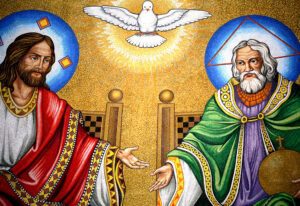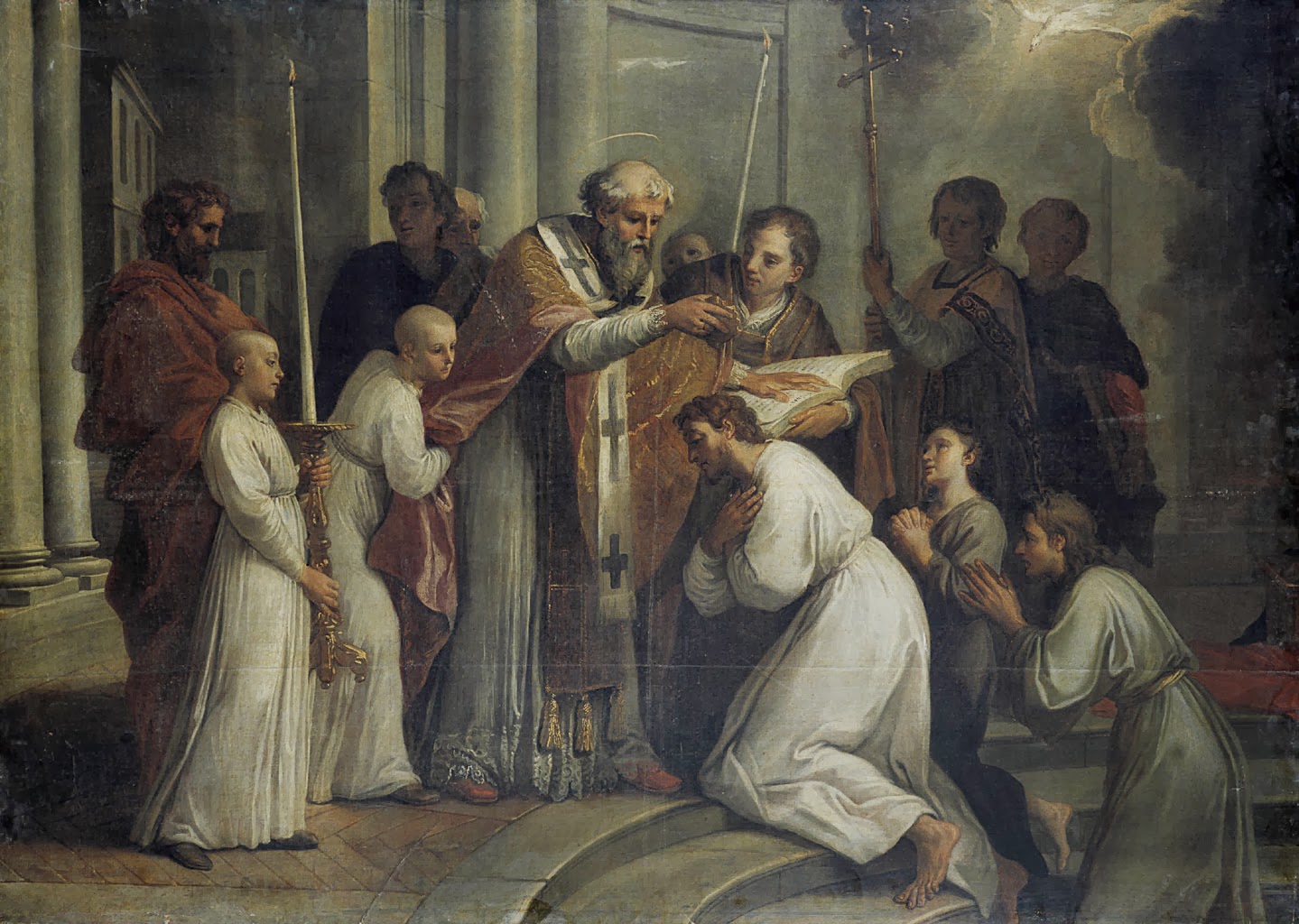
Today is the Solemnity of the Holy Trinity, the fundamental doctrine of the Catholic Church: that there is One God in three distinct Persons — Father, Son, and Holy Spirit — in perfect unity. There are not three gods, but one God. St. Augustine taught us that the Trinity is a mystery too profound for the finite human mind to fully grasp. He illustrated this through the analogy of a child trying to empty the ocean into a small hole in the sand, suggesting that understanding the Trinity is equally impossible for the limited human intellect.
However, this doctrine has been revealed clearly both in Sacred Scripture and in the dogmatic life of the Church. The Church’s liturgy reveals to us not only the God who is Trinity, but also the Trinitarian structure of Christian existence and tradition, as beautifully elucidated by the Fathers of the Church, especially St. Augustine.
On May 25, 2026, His Holiness Pope Leo XIV launched his first encyclical entitled Magnificat Humanitas, meaning “The Magnificent Humanity.” This encyclical is a product of profound reflection intended to guide human hearts toward a deeper understanding of the human person within the context of modern technology, particularly the rise of Artificial Intelligence (AI). It warns us about the dangers of AI and the possible loss of human dignity in this digital age.
Through the Holy Father, the Church speaks to the world about AI, which has increasingly influenced how people work, think, relate, create, learn, and even understand human identity itself. Thus, the Church is morally bound to address its ethical implications and social risks. The Holy Father lovingly reminds us that the real question is not simply how advanced AI may become, but whether humanity itself becomes more faithful, wiser, and more truly human through its development, without losing its God-given dignity.
We must be transformed by Jesus through the Gospel message and Truth, rather than reduced to human robots controlled by a few through the power of algorithms and modern technology.
Furthermore, the Holy Father said: “AI may simulate intelligence, but it cannot love, sacrifice, show compassion, or carry moral responsibility.” This is a timely awakening for all humanity. Our profound transformation must remain rooted in humility, shared responsibility, authentic human presence and relationships, and in listening to many voices. Inventions and technology can assist humanity, but they cannot save it. No machine can fulfill the deepest desires of the human heart — only Jesus Christ can. Ultimately, God must remain at the center.
The three readings today remind us of the wonders of God revealing Himself to Moses as a merciful and compassionate God. St. Paul likewise strives to impart blessings of peace and love by invoking the Trinitarian blessing: “The grace of the Lord Jesus Christ, and the love of God, and the fellowship of the Holy Spirit be with all of you.”
In the Gospel taken from St. John, we encounter important truths. Instead of merely trying to rationalize this fundamental doctrine, perhaps we are invited to know God through a different and more personal approach.
First, the Gospel states succinctly that God is motivated by love to give us His only Son so that everyone who believes in Him might have eternal life. God’s giving of His Son, Jesus Christ, through the Incarnation and His Paschal Mystery, reveals God’s deepest intention and desire: that we might have eternal life. Believing in God’s immense love for the world leads us to a deeper knowledge of God Himself.
Second, while it is true that our human capacities cannot fully explain who God is, it is also true that we are capable of personally knowing and practicing love. We encounter opportunities to give and receive God’s love in our ordinary daily experiences. The more room we make for God’s loving identity in our lives, the more our own identities become shaped by His love. The more our identities become love, the better we are able to love others. The act of loving becomes a reflection of the God who reveals Himself through love.
Third, Moses ascends the mountain and encounters God in a radically personal way. We see the same reality in the Gospel today, where Jesus speaks with Nicodemus in a deeply personal encounter. Moses comes to understand God as the breath of all life: merciful and gracious, slow to anger, and rich in kindness and fidelity. Jesus reveals God as faithful, non-judgmental, liberating, and life-giving. In one word: God is love (1 John 4:8).
Our Catholic identity, being made in the image of the Trinity, calls us to love one another.
What is happening in our world today gives us a profound opportunity to influence others to recognize and participate in God’s loving Trinitarian identity. But this transformation must begin within ourselves — through internal reconciliation as individuals and as communities.
Let us begin to realize that God is indeed very close to us. If Christ is God, and if Christ dwells within us through the Holy Spirit, then through the sacraments God truly lives and acts within us. This ever-living God continues to touch us and dwell among us.
Our loving relationships reflect God’s truth.
Our unity reflects God’s undivided communion.
God bless you.
Fr. Arlon, OSA