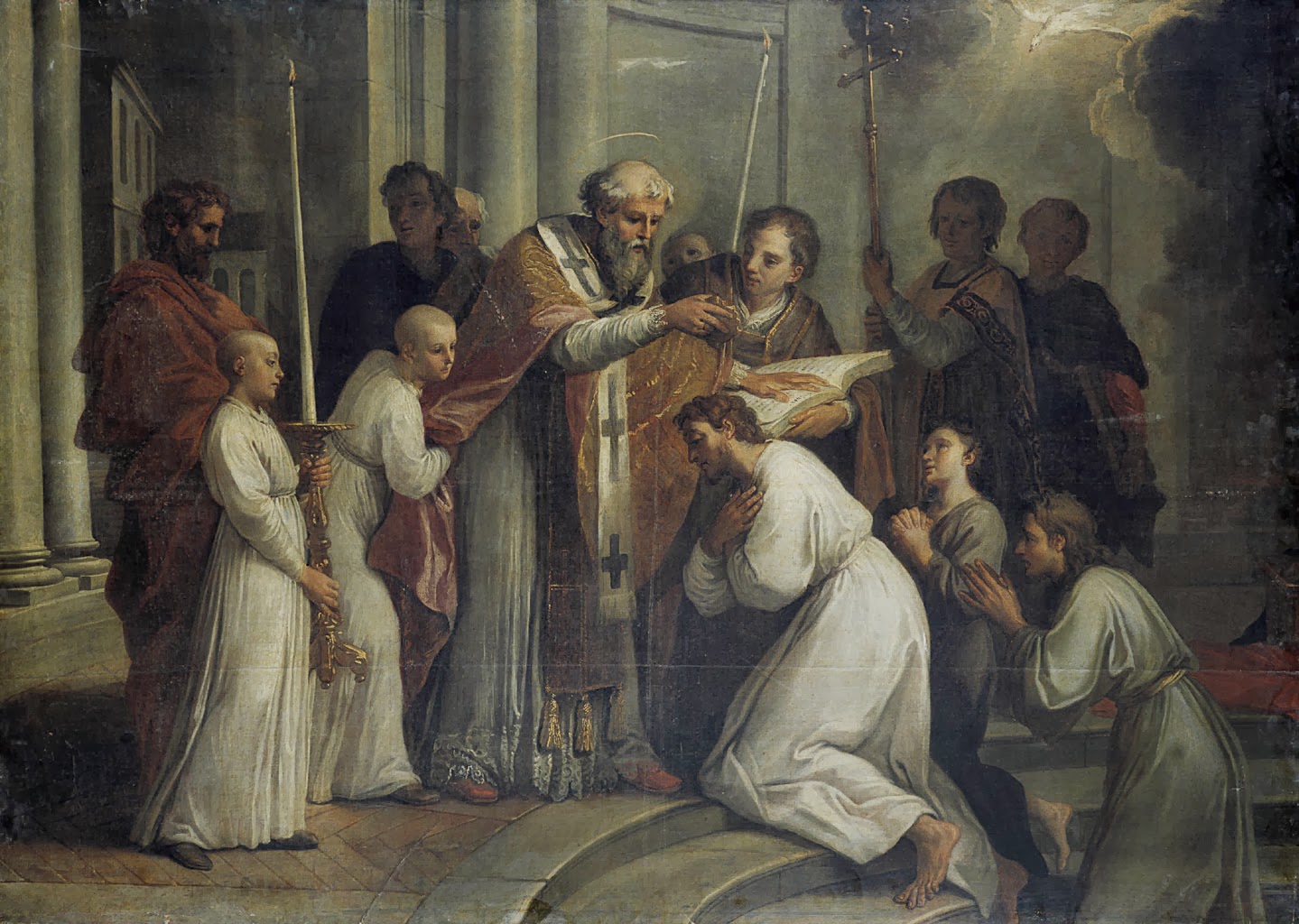
The Dictate of the Heart: 20th Sunday in Ordinary Time, Year A

For the past few days, I engaged in a discussion with the Seventh Day Adventists with regards to their claim that they are better than Catholics because they honor and keep the Sabbath Day which is Saturday to follow God’s commandments rather than violating it and to change it to Sunday. I kindly pinpointed to them that Christ came to fulfill the law and not to abolish it. When Jesus came, he establishes the new covenant. On the day that He died, the curtain of the temple was torn into two to signify the breaking of the old customs and giving way to the new horizon which raises Jesus for the redeemed. (Matt. 27:51) The tearing of this curtain is an indication of losing Jerusalem Temple as the center of worship. Jesus declared that the house of God was forsaken (Luke 13:33) for Jesus himself is the new temple with no curtain barring us from intimacy with Him. In Addition, the torn curtain reveals that all believers have anew and unequaled access to the Father in Christ. Furthermore, He has risen from the dead on the first day of the week which is Sunday. Our profound understanding about Jesus’ real purpose of coming into this world is to rejoice about the new covenant established by God, in Him, through Him and with Him.

Meditating on the first reading taken from the Prophet Isaiah, this passage describes a God who invites us to a relationship open to all peoples who sincerely seeks and accepts that “my house shall be called a house of prayer for all peoples.” God’s love and salvation generously promised by God for all people of all time which I am reminded of the Holy Father, Pope Francis message to the youth all over the world during the recently concluded WYD 2023, in Lisbon, Portugal. The Pope says, “There is no abstract love. Love is concrete. It’s tangible. It requires us to get our hands dirty.” Furthermore, he says, “On the boat of the Church, there has to be room for everyone: all the baptized are called on board to lower their nets, becoming personally involved in the preaching of the gospel…when dialogue, co-responsibility and participation are lacking the Church grows old.” Thus, the love and mercy of God is encompassing and not exclusive, all of us together, as Church. God calls each one by name.

Likewise, in the second reading, St. Paul’s passionately preached that “For God delivered all to disobedience, that He might have mercy upon all.” It means that God’s mercy is intended for all, whether Jew or Gentile.

The message of God’s love and mercy is for all to know that we are welcome and embrace by God, however, we don’t want to fall into temptation making judgment upon others. Yes, salvation is for all but there is judgment that awaits all of us.

I am mentioning this because some extreme groups are quick to criticize the Church’s stance on inclusivity, however, walking together, and not to fall into discrimination, is the new process that the Church has been called to Synodality which means to pursue a greater Communion, Participation and Mission.

The gospel today from Matthew narrates to us about Jesus’ gesture of love towards the Canaanite woman who calls out to Him, “Have pity on me, Lord, Son of David! My daughter is tormented by a demon.” But Jesus seemingly ignored her for not saying a word in answer to her.

Perhaps, we do not comprehend what is in the heart of the Lord. Let us spend time to contemplate the attitude of Jesus towards the Canaanite woman.

First, with courage, the Canaanite woman went and kneeled before Jesus and said, “Lord, help me.” Jesus told her, “It is not right to take the children’s bread and throw it to the dogs” (Matthew 15:26). She answered Jesus, “even the dogs get to eat the crumbs that fall from their masters’ table.” Jesus was surprised to her response, Jesus exclaimed, “O woman, great is your faith! Be it done for you as you desire.’ And her daughter was healed instantly” (Matthew 15:28).

In our display of faith, it can move Jesus’ heart to act in our favor. Sometimes we give up our faith easily, but we must be consistent even in times of great trial. We need to be firmed with absolute trust in God who knows what is best for us.

Second, Jesus’ response, that He was sent only to the lost sheep of Israel (Matthew 15:24), it means that Jesus was to minister to the Jews first, consequently, their faith would be a witness to the Gentiles, and they would then glorify God for how He fulfilled His promises (Isaiah 53:6-8; Romans 15:8-9).

Third, why did Jesus compare the Canaanite Woman to a Dog? Calling someone a “Dog” is not derogatory name-calling, but it means a metaphor for “Gentiles.” Since the Jews used this word to refer to people under the ceremonial impurity for not being counted as “Chosen People of God. So most of His disciples were Jews, hearing Him calling the woman a dog, I presumed that they approved it unanimously. They understood that she was an outsider.

In many instances, Jesus’ mission is calling all men to Himself, including the Gentiles. Pharisees, scribes, Jewish religious leaders, the Samaritans, Levites, and Canaanites whom He considered as the Israel’s lost sheep. Jesus has to fulfill prophecy to bring them back to God by preaching and holy examples. Jesus, as Messiah, is the One whom the Old Testament prophesied would gather the lost sheep (Ezekiel 34:23-24; Micah 5:4-5). He must fulfill His ministry by preaching to the Jews was His priority.

Can we learn anything from the Canaanite Woman’s Story? Let us reflect on Canaanite woman’s attitude of being frank yet humble, persistent but patient, and courageous to approach Jesus with much faith. We can all do the same and encourage others to do so as well.

God bless you.

Fr. Arlon, osa

——————————-

El Dictado del Corazón: Vigésimo Domingo del Tiempo Ordinario, año A

  • Isaías 56:1, 6-7
  • Salmo 67:2-3, 5, 6+8
  • Romanos 11:13-15, 29-32
  • Mateo 15:21-28

Durante los últimos días, participé en una discusión con los Adventistas del Séptimo Día sobre su afirmación de que son mejores que los católicos, porque honran y guardan el día de reposo, que es el sábado para seguir los mandamientos de Dios en lugar de violarlo y cambiarlo al domingo. . Amablemente les señalé que Cristo vino a cumplir la ley y no a abolirla. Cuando Jesús vino, estableció el nuevo pacto. El día de su muerte, el velo del templo se rasgó en dos para significar la ruptura de las viejas costumbres y dar paso al nuevo horizonte que suscita Jesús por los redimidos. (Mat. 27:51) El rasgado de esta cortina es una indicación de la pérdida del Templo de Jerusalén como centro de adoración. Jesús declaró que la casa de Dios fue abandonada (Lucas 13:33) porque Jesús mismo es el nuevo templo sin cortinas que nos impide tener intimidad con Él. Además, la cortina rasgada revela que todos los creyentes tienen acceso nuevo e inigualable al Padre en Cristo. Además, resucitó de entre los muertos el primer día de la semana, que es el domingo. Nuestra profunda comprensión del verdadero propósito de Jesús al venir a este mundo es regocijarnos por el nuevo pacto establecido por Dios, en Él, por Él y con Él.

Meditando sobre la primera lectura tomada del profeta Isaías, este pasaje describe a un Dios que nos invita a una relación abierta a todos los pueblos que sinceramente busca y acepta que “mi casa será llamada casa de oración para todos los pueblos”. El amor de Dios y la salvación son generosamente prometidos por Dios para todas las personas de todos los tiempos. Recuerdo el mensaje del Santo Padre, el Papa Francisco a los jóvenes de todo el mundo durante la Jornada Mundial de la Juventud “JMJ” 2023 recientemente concluida, en Lisboa, Portugal. El Papa dice: “No hay amor abstracto. El amor es concreto. es tangible Requiere que nos ensuciemos las manos”. Además, dice, “En la barca de la Iglesia tiene que haber sitio para todos: todos los bautizados están llamados a subir a bordo para echar las redes, implicándose personalmente en la predicación del evangelio… cuando el diálogo, la corresponsabilidad, y falta la participación, la Iglesia envejece”. Así, el amor y la misericordia de Dios son abarcadores y no excluyentes, todos nosotros juntos, como Iglesia. Dios llama a cada uno por su nombre.

Asimismo, en la segunda lectura, San Pablo predicaba apasionadamente que “Dios entregó a todos a la desobediencia, para tener misericordia de todos”. Significa que la misericordia de Dios está destinada a todos, sean judíos o gentiles.

El mensaje del amor y la misericordia de Dios es que todos sepan que somos bienvenidos y acogidos por Dios, sin embargo, no queremos caer en la tentación de juzgar a los demás. Sí, la salvación es para todos, pero hay un juicio que nos espera a todos.

Menciono esto porque algunos grupos extremos se apresuran a criticar la postura de la Iglesia sobre la inclusión, sin embargo, caminar juntos, y no caer en la discriminación, es el nuevo proceso al que la Iglesia ha sido llamada a la Sinodalidad que significa buscar una mayor Comunión, Participación, y Misión.

El evangelio de hoy de Mateo nos narra el gesto de amor de Jesús hacia la mujer cananea que le grita: “¡Ten piedad de mí, Señor, Hijo de David! Mi hija está atormentada por un demonio”. Pero Jesús aparentemente la ignoró por no decir una palabra en respuesta a ella.

Quizás, no comprendemos lo que hay en el corazón del Señor. Dediquemos un tiempo a contemplar la actitud de Jesús hacia la mujer cananea.

Primero, con valor, la mujer cananea fue y se arrodilló ante Jesús y dijo: “Señor, ayúdame”. Jesús le dijo: “No está bien quitar el pan de los hijos y echárselo a los perros” (Mateo 15:26). Ella le respondió a Jesús: “Hasta los perros comen las migajas que caen de la mesa de sus amos”. Jesús se sorprendió por su respuesta, Jesús exclamó: “¡Oh mujer, grande es tu fe! Te sea hecho como deseas. Y su hija fue sanada al instante” (Mateo 15:28). En nuestra demostración de fe, puede mover el corazón de Jesús para actuar a nuestro favor. A veces renunciamos a nuestra fe fácilmente, pero debemos ser constantes incluso en tiempos de gran prueba. Necesitamos estar firmes en la confianza absoluta en Dios que sabe lo que es mejor para nosotros.

Segundo, la respuesta de Jesús, que Él fue enviado solamente a las ovejas perdidas de Israel (Mateo 15:24), significa que Jesús debía ministrar primero a los judíos, en consecuencia, su fe sería un testimonio para los gentiles, y ellos luego glorifican a Dios por cómo cumplió sus promesas (Isaías 53:6-8; Romanos 15:8-9).

Tercero, ¿por qué Jesús comparó a la mujer cananea con un perro? Llamar a alguien “Perro” no es un insulto despectivo, sino que significa una metáfora de “gentiles”. Ya que los judíos usaban esta palabra para referirse a las personas bajo la impureza ceremonial por no ser contados como “Pueblo Elegido de Dios”. Entonces, la mayoría de sus discípulos eran judíos, al escucharlo llamar a la mujer un perro, supuse que lo aprobaron por unanimidad. Entendieron que ella era una extraña.

En muchos casos, la misión de Jesús es llamar a todos los hombres hacia Él, incluidos los gentiles, fariseos, escribas, líderes religiosos judíos, samaritanos, levitas y cananeos, a quienes consideraba como las ovejas perdidas de Israel. Jesús tiene que cumplir una profecía para traerlos de regreso a Dios mediante la predicación y ejemplos santos. Jesús, como Mesías, es Aquel de quien el Antiguo Testamento profetizó que recogería la oveja perdida (Ezequiel 34:23-24; Miqueas 5:4-5). Debía cumplir Su ministerio predicando a los judíos era Su prioridad.

¿Podemos aprender algo de la historia de la mujer cananea? Reflexionemos sobre la actitud de la mujer cananea de ser franca pero humilde, persistente pero paciente y valiente para acercarse a Jesús con mucha fe. Todos podemos hacer lo mismo y animar a otros a que también lo hagan.

Dios los bendiga.

Padre Arlón, osa
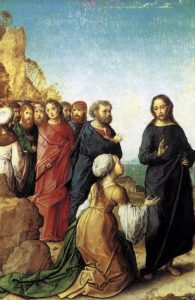
The Dictate of the Heart: 12 Sunday after Pentecost, Extraordinary Form (TLM)

Today we heard from the epistle and the gospel about our belief that all gifts come from the mercy and love of God. Though we are unworthy, God sustains us with every good gifts to do laudable service that “we may not run without stumbling towards the attainment of His promises.” This is the collect prayer we utter signifying our total dependence on God alone.

The epistle today, taken from the second book of St. Paul to the Corinthians, affirms that “Not that we are sufficient to think anything of ourselves, as of ourselves: but our sufficiency is from God.” (2 Co 3:5) It is true that as Children of God, we are not able by our own limited capacity and power to do without the grace of God. The cooperation to the given grace of God makes us able to perform our works consistently for others. St. Augustine teaches that both faith and good works must come from God’s grace, which dictates for us to be receptive and be able to be strengthened to accomplish our primary responsibility, which is to dispense charity and service. It is clear that we are not in ourselves sufficient to do anything good by our own power. In humility, we are worthless ourselves in that we not only can do nothing, it is impossible by our own strength, and all our power to do good is derived from God. This grace comes from God alone which is necessary for the exercise of our ministry and good deeds. We are in the new covenant which we all believe that we are under the fulness of grace and truth revealed and given by our Lord. So St. John says, “The law was given by Moses, grace and truth came by Jesus Christ ” (John 1:17).

The gospel today taken from St. Luke narrates to us three points to remember:

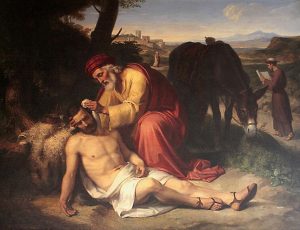
Firstly, the consequence of committing a sin is man’s misery: “A certain man went down from Jerusalem, and fell among robbers, who also stripped him and having wounded him, went away, leaving him half dead.” This is a story of how sin affects humanity with such miseries, for the power of evil is real, “and fell among the thieves, who are devils taken the control.” St. Timothy says that “they may recover themselves out of the snare of the devil who are taken captive by him at his will.” (2 Tim 2:26) The man being wounded means violation by sins which cause much hurt. St. Augustine’s concept is that sins have taken away from the person integrity, beauty, virtue, and salvation.

Secondly, it has revealed to us Christ’s abundant mercy upon the sinner, “A certain Samaritan, as he journeyed, came where he was; and when he saw him he had compassion for him, and went to him, and bound up his wounds, pouring in oil and wine, and set him on his own beast, and brought him to an inn, and took care of him. And on the morrow when he departed, he took out two pence, and gave them to the host, and said unto him, “Take care of him; and whatsoever you shall spend more, when I come again I will repay thee.” How gracious is the Lord in baptism, Psalm 147:3, “He heals the broken in heart and bindeth up their wounds.” Jesus instituted the Sacrament of Baptism for the forgiveness of sins and for our salvation.

Thirdly, the rule which is given to us for imitation: “Go and do thou in like manner/likewise.” Brothers and Sisters, the clear message that we need to absorb is that regardless of what culture or religion, beliefs, and nationality, etc. we are from, we should be willing to help those who are in need. Even if they are different from us, they are still our neighbors so we should love them the way we love ourselves.

This gospel story reminds us that no matter how much we differ from each other, we must be obedient to God the way He loves. We should help each other even though we are not the same. Our neighbors are the ones who help us through anything. What have we done so far in the name of charity? When people measure charity according to the written policy, (Oh I don’t wanna give because it is against the policy), then that person is blinded by his ungrateful heart. Helping others from your loving heart is what makes you feel good about yourself.

God bless you.

Fr. Arlon, osa

The Dictate of the Heart: Solemnity of the Assumption of the Blessed Virgin Mary – Mass during the Day

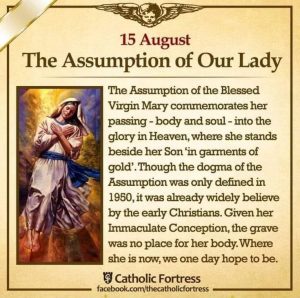
Today, we celebrate the Solemnity of the Assumption of the Blessed Virgin Mary. This feast has been traced back as far as the third century according to some historians. After profound reflection on this essential teaching of the Church that Mary was assumed, both her corporal body and soul, into heaven, this dogma was defined in the Papal declaration called “Munificentissimus Deus” which means “The most bountiful God,” announced by Pope Pius XII as divinely revealed dogma on November 1, 1950.

St. John, the Apostle, wrote the book of Revelation. However, in this particular chapter 11:19, the early Christians onward took this passage, “a woman clothed with the sun, with the moon beneath her feet, and on her head a crown of twelve stars,” which was often quoted and influenced their Christian consciousness is that the Blessed Mother Mary made history as part of the mystery of the Incarnation. She continues to this day to inspire and to aspire the richness of her glory with God.

Our second reading from the first letter of St. Paul to the Corinthians deals with the resurrection, both Christ’s resurrection and our own. Paul was reacting to their doubts of the resurrection about which he worked hard because he was confronted with Jewish concepts about the Old Testament abode of the dead, that they called “Sheol” which means “grave.” The Old Testament never uses the word resurrection but has several allusions to resurrection. They had no understanding in their belief system until it progressed in the direction of resurrection as we can read in Isaiah 26:19, “Your dead shall live. My dead bodies shall arise,” and more passages in the Old Testament. In the New Testament, some Jews denied any possibility of resurrection or life after death like the Sadducees, while other Jews did believe in the resurrection of the dead like the Pharisees. St. Paul wants the Corinthian Christians to know that belief in the resurrection, both Christ’s resurrection and the general resurrection of believers in the last days is foundational to the Christian faith. When Paul says that the resurrected Christ is “the first fruits of those who are asleep,” he is telling us that Christ’s resurrection is just the beginning. His resurrection indicates the abundance of resurrections yet to come, that is, the resurrection of all those who have faith in Christ, our Lord.

Today, I am not trying to equate resurrection with the Assumption of the Blessed Mother Virgin Mary. Mary’s “Assumption” into heaven is the unprecedented privilege given to Mary being the chosen vessel of the Incarnate Son, Jesus Christ. According to St. Augustine, “the Virgin Mary who did not have original sin, fell asleep in the Lord, died, and was raised body and soul into Heaven by God.”

Brothers and Sisters, this is not only a dogma to be blindly accepted, but we must comprehend well the merits of this teaching:

Frist, it is an assurance that being a Catholic, Mary who is fully human is able to reach the pinnacle of holiness and grace by experiencing God’s promise of her final destiny. God has won, for God possesses strength stronger than death. Mary was taken up body and soul into heaven; there is even room in God for the body. Heaven is no longer far and unknown to us. We have a mother in Heaven. It gives me great joy to share in the inheritance for those who are faithful and obedient to follow God’s will.

Second, many of us are influenced by secularism, and we tend to view our existence as independent from God. Our tendency is to ignore God’s role and to see ourselves as self-actualizing individuals and not placing God at the center of our existence and the universe. We become self-inflated and, sadly, tempted to put down those who are less successful.

According to II Vatican Council, “Mary shines forth on earth as a sign of certain hope and comfort to the Pilgrim people of God.” We are pilgrims here on earth; thus, this Assumption of Mary points us to eternity as the ultimate meaning and horizon of our existence.

Third, this feast of the Assumption of Mary is the source of encouragement. God made the perfect abode for His Son in Mary’s heart. It is a very beautifully accepted truth that both humanity and divinity are completely at home with Mary. Thus, relationship is a great encouragement to all of us, like the love between Jesus and His mother, Mary. Jesus wanted His mother to be with Him in Heaven without passing thru corruption and decay. It is only fitting to know the inseparable life for both of them in all eternity. Mary has been called “Blessed from all generations because her soul magnifies the Lord.”

Mary is always available to us. We can ask her for the grace to help us overcome our temptations. She knows God’s plans and she can help us in discerning His plans for us. She will assist us on our journey toward heaven. She witnesses to the future that is open to every human to share in the inheritance of the holy ones in light (Col 1:12).

Mary was conceived without sin and prays for those who have recourse to you.

Fr. Arlon, osa

The Dictate of the Heart: 19th Sunday in Ordinary Time, Year A

Nowadays I have never heard of anyone who can walk on the water, except Jesus. In the movie “The Chosen,” the director and the whole cast were able to present the scene of Jesus walking on the water. It is a dramatic and realistic scene and beautifully done. I am so amazed at how they did it. By coincidence, I saw a video of how they filmed it, and the director revealed how they made it so real. It was inside a huge water storage container filled with water. Through technology, they created sound effects and used a floating device for the main actor to make believe that he is walking on the water. The cinematography is indeed wonderfully amazing. Movies are made now to let the audience enjoy the virtual effects on the big screen as if the event is actually happening in front of us. It portrays the most exciting techniques to captivate viewers’ emotions and feelings. It is a movie we must watch.

Today is the 19th Sunday in Ordinary Time. This is summertime, a time for family bonding, picnics, or outdoor activities. Let us be careful swimming in the sea or lake and be mindful that we cannot walk on the water, only Jesus can. However, just listen to Jesus for a moment as He says, “Take courage, it is I; do not be afraid…Come.”

In our first reading, taken from the first book of Kings, Elijah had his own encounter with God on the mountain. To understand Elijah’s journey, we read the previous chapters of this book, and then we have a deep interest in how he managed his life at Horeb. While he was resting and hiding in a cave, the Lord said to him, “Go outside and stand before the Lord, the Lord will be passing by.” Elijah stood outside where he was confronted with a holy mess of natural winds that are breaking rocks to bits, an earthquake, and an all-consuming fire. Somehow, he was patiently waiting until his persistence paid off. “After the fire there was a tiny whispering sound.” The Lord passed by. There it took place; God sent him on a mission to fulfill.

From the second reading, St. Paul expresses deep sorrow and disappointment for the people of Israel who refused to accept Jesus as the fulfillment of God’s promise. St. Paul says, “I feel great sorrow and anguish for my people, the Israelite brothers, and sisters because they have not believed Jesus is the Messiah.” I believe that the heart of Paul was not only broken, but our hearts as well. We feel the sorrow to know that our children don’t attend Mass, something that is completely a disconnect from God. We have seen our families walk away from the Lord. We grieve their absence here.

Our gospel today narrates a story to us about the apostles who were sent by Jesus in a boat. The experience of the apostles had them crossing to the other side of the Lake, with winds and waves disturbing the calmness of their journey, and they succumbed in fear.

Let us keep in mind the challenges of this gospel to this contemporary world:

First, we experience a similar call from the Lord amidst chaos in the world we are in. The world is dangerous without Christ in our hearts. Though we are confronted with the challenge, we stay calm and never panic, for the Lord continues to be present. Monsters and evils have no power lurking over us so deeply because Jesus has ultimate power to defeat them.

Second, as we go through life, Jesus journeys with us. Many times, we are unable to recognize Him because we are blinded by the clouds of fear and anxieties. Our faith in the Lord is our eyes to recognize Him for He never abandons us. If we are neglectful of opening our eyes with faith in moments of sorrows, difficulties, and pain, then we become like Peter, who had weak faith and started drowning.

Third, let us allow ourselves to be invited by Jesus who speaks: “Take courage, it is I; do not be afraid…Come,” and learn to rely upon Him. This is unlike Peter, who was blinded by his fear. When dark spirits control us, seek Jesus’ comforting call through our prayers that spring out safety and stability of our life. Overcoming our fear draws us near to Jesus.

The Church calls for Synodality; we journey together, we walk together, we are in communion towards God. When all feels lost and desperate, Jesus appears, walking not on the water but together with us. We cannot walk alone, disturbed by the terror of evil, and our survival depends on how we recognize Jesus, the Lord.

Where is God’s presence? Not in the turmoil of natural calamities, but we find Jesus in the silence of our hearts in prayer. Therefore, we pray to be open to God’s presence and to be attentive to His calling that is beyond our present comfort.

God bless you.

Fr. Arlon, osa

———————————-

El Dictado del Corazón: Decimonoveno Domingo del Tiempo Ordinario, año A

  • 1 Reyes 19:9a, 11-13a
  • Salmo 85:9, 10, 11-12, 13-14
  • Romanos 9:1-5
  • Mateo 14:22-33

Hoy en día nunca e escuchado de que alguien pueda caminar sobre el agua, solo Jesús. En la película “Los elegidos”, el director y todo el elenco pudieron presentar la escena de Jesús caminando sobre el agua. Es una escena dramática y realista y bellamente hecha. Estoy tan asombrado de cómo lo hicieron. Por coincidencia, vi un video de cómo lo filmaron y el director reveló cómo lo hicieron tan real. Fue dentro del enorme contenedor de agua, o dentro de un depósito de agua gigante, donde a través de la tecnología, crearon efectos de sonido y utilizaron un dispositivo flotante para el actor principal, para hacer creer que está caminando sobre el agua. La cinematografía es de hecho maravillosamente sorprendente. Ahora se hacen películas para que la audiencia disfrute de los efectos virtuales como si el evento sucediera frente a la pantalla grande. Retrata las técnicas más emocionantes para cautivar las emociones y sentimientos de los espectadores. Es una película que recomiendo ver.

Hoy es el Decimonoveno Domingo del Tiempo Ordinario. Este es el verano, un momento para la unión familiar, picnics o actividades al aire libre. Tengamos cuidado al nadar en el mar o en el lago, pero tengamos más cuidado de no tratar de caminar sobre el agua, solo Jesús puede hacerlo. Sin embargo, solo escuche a Jesús por un momento, Él dice: “Ánimo, soy yo; no tengas miedo… Ven.”

En la primera lectura tomada del primer libro de Reyes, Elías tuvo su encuentro con Dios en la montaña. Para comprender el viaje de Elías, leemos los capítulos anteriores de este libro y luego tenemos un profundo entendimiento, en cómo manejó su vida en Horeb. Mientras descansaba y se escondía en una cueva. El Señor le dijo: “Sal fuera y ponte delante del Señor, el Señor pasará”. Elijah se quedó afuera, luego se enfrentó a un desastre sagrado de vientos naturales que rompían rocas en pedazos, un terremoto y un fuego que todo lo consumía. De alguna manera, estaba esperando pacientemente hasta que su persistencia valiera la pena. “Después del incendio, hubo un pequeño susurro”. El Señor pasó. Allí tuvo lugar el envío de Dios para una misión a cumplir.

Desde la segunda lectura, San Pablo expresa un profundo dolor y desilusión por el pueblo de Israel que se negó a aceptar a Jesús como el cumplimiento de la promesa de Dios. San Pablo dice: “Siento gran dolor y angustia por mi pueblo, hermanos y hermanas israelitas porque no han creído que Jesús es el Mesías”. Yo creo que el corazón de Pablo no solo estaba quebrantado sino también el nuestro. Sentimos el dolor de saber que nuestros hijos no asisten a Misa, algo que está completamente desconectado de Dios. Hemos visto a nuestras familias alejarse del Señor. Lamentamos su ausencia aquí.

Nuestro evangelio de hoy nos narra una historia sobre los apóstoles que fueron enviados por Jesús en una barca. La experiencia de los apóstoles cruzando del otro lado del lago, los vientos y las olas perturban la tranquilidad de su viaje, pero sucumben al miedo.

Tengamos en cuenta los desafíos de este evangelio para este mundo contemporáneo:

Primero, experimentamos un llamado similar del Señor en medio del caos en el mundo en el que estamos. El mundo es peligroso sin Cristo en nuestros corazones. Aunque nos enfrentamos al desafío, mantenemos la calma y nunca entramos en pánico porque el Señor sigue estando presente. Los monstruos y los males no tienen poder para acecharnos tan profundamente porque Jesús tiene el máximo poder para vencerlos.

En segundo lugar, a medida que avanzamos por la vida, Jesús viaja con nosotros. Muchas veces somos incapaces de reconocerlo y estamos cegados por las nubes del miedo y la ansiedad. Nuestra fe en el Señor son nuestros ojos para reconocerlo porque Él nunca nos abandona, somos negligentes en abrir los ojos de la fe en los momentos de tristeza, dificultad y dolor.

Tercero, dejémonos invitar por Jesús que habla: “”Tranquilícense y no teman. Soy yo… Ven,” y aprender a confiar en Él. A diferencia de Pedro, que estaba cegado por sus miedos. Cuando los espíritus oscuros nos controlan, busquemos el llamado consolador de Jesús a través de nuestras oraciones que brotan la seguridad y la estabilidad de nuestra vida. Superar nuestros miedos nos acerca a Jesús.

La Iglesia llama a la sinodalidad, juntos en la jornada, caminamos juntos y estamos en comunión con Dios. Cuando todo se siente perdido y desesperado, aparece Jesús, caminando no sobre el agua sino junto a nosotros. No podemos caminar solos, perturbados por el terror del mal y nuestra supervivencia depende de cómo reconozcamos que Jesús, es el Señor.

¿Dónde está la presencia de Dios? No en la confusión de las calamidades naturales, sino que encontramos a Jesús en el silencio de nuestros corazones en oración. Por lo tanto, oramos para estar abiertos a la presencia de Dios y estar atentos a su llamado que está más allá de nuestra comodidad actual.

Dios los bendiga.

Padre Arlón, osa
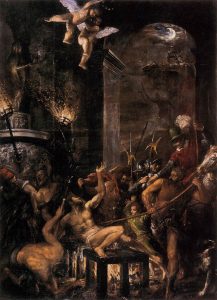
The Dictate of the Heart: 11th Sunday after Pentecost, Traditional Latin Mass

Today is the 11th Sunday after Pentecost. We are reminded that every Sunday we gather together in this Church to feel God’s presence for “God in His Holy face, God who makes men of one mind to dwell in a house. He shall give power and strength to His people.” (Psalm 67:2)

Our epistle today, taken from the first letter of St. Paul to the Corinthians, describes how the Goodnews being preached to them would certainly benefit them if it is properly received and if one will stand and hold it in his heart. The Goodnews St. Paul was preaching is the message of salvation in Jesus Christ. It is the way to escape punishment and for everyone to deserve salvation from God. It must first be believed and embraced. The Corinthian believers in the Lord, despite all their problems of life’s strifes, division, and immorality, they still stood for the gospel. Meaning to say, the work of the Holy Spirit is effective because they stood behind the gospel being preached to them, in contrast to the other communities with strange spirituality. They were doing well in that they did stand by the gospel. They hold fast the gospel Paul preached to them. Every one of us must take seriously our responsibility to not only have a good past, and a good present, but to be determined to have a great future with the Lord. At this present age, we are always tempted to go against the will of God; hence, all the more, we must hold on to Christ, the Divine healer.

The gospel today narrates to us another story of Jesus’ miraculous healing. Many people were seeking Jesus and were brought to Him, “one deaf and dumb, and they besought Him that He would lay His hand upon him.” Jesus responded by taking this man away from the crowd and performing His healing ritual.

Let us focus on todays’ gospel with these three important lessons:

First, Jesus healed a man who was not only deaf but also had a speech impediment, meaning to say, he cannot communicate with anyone. It was thru the man’s friend that he was brought to Jesus and begged for healing. Our understanding of being a Christian is to be in communion with others thru our love and faith. We are called to respond to the needs of others, regardless of race, color, and religious affiliation. I cannot understand other denominations who don’t welcome others if they don’t belong to their congregation. The Lord teaches us that we must go beyond our limits for the fulfillment of His commands.

Second, Jesus healed the man by taking him away from the crowd. Perhaps Jesus realizes that the man does not want to cause others to be envious and maybe was trying to avoid critical comments from the religious leaders. Jesus wants to do and fulfill His mission to sow love and compassion. He simply desired to make the man “whole” once again, and Jesus performs miracles away from the public eyes.

Third, “Jesus charged them that they should tell no one.”(v.35) This prohibition of Jesus to not say anything to anyone is an indication of Jesus’s will that everything is in accordance with the Father. Time will come when everything will be revealed which is perfectly acceptable to His Father in heaven.

What is our ailment, sickness, and impediment that we wish and pray to God for healing? What do we believe would make us healed and experience wholeness again? Do we have the courage and the faith in the Lord today? Do we believe in the power of healing with which Jesus is touching us today? Will we trust Him? Domine, clamavi ad te, et sanasti me. Lord, I cried unto Thee and Thou hast healed me.

God bless you.

Fr. Arlon, osa

The Dictate of the Heart: The Feast of St. Lawrence, the Deacon and Martyr.

Today we celebrate the Feast of St. Lawrence, Deacon, and Martyr. When I was a Parish Priest in the Philippines, one of those villages of the parish jurisdiction is under the Patronage of St. Lawrence. During the papacy of Sixtus II, he was appointed as custodian of the properties of the Church in Rome and cared for the temporal needs of the poor. Because of his position, Emperor Valerius ordered the execution of the Pope, bishops, and clergymen except Lawrence, the Deacon. At the back of Valerius’ mind, Lawrence could bring him all the treasures of the Church. Indeed, Lawrence was obedient but instead of bringing expensive chalices made of gold and silver, he brought to Valerius the true treasures of the Church, the sick, the orphans, the widows, and poor people. Valerius was angry and commanded his soldier to roast Lawrence alive. With his fidelity to God and the Church, he offered himself to die and cheerfully told his executioners, “It is well done! Flip me over to the other side.” This story lingers in the memory of the people that even until now, his martyrdom has been remembered with humor and heroism. He died in 258 AD.

Today’s first reading from St. Paul’s second epistle to the Corinthians reminds us that “God is able to make every grace abundant for you, so that in all things, always having all you need, you may have an abundance of every good work.” God gives us everything, but many struggle about giving back. The good things we are given we should give back in charity, and in good works. And we should give back cheerfully. Whatever we give our time and energy, then expect more blessings in return. When we give, we know how to love, and if there is no love, then it is useless because you will always remember and count what you have given.

The gospel tells us when Jesus says, “…Unless a grain of wheat falls to the ground and dies, it remains just a grain of wheat; but if it dies, it produces much fruit.” We are the seeds buried in the soil. Some transformations are hidden, but the power of growing unfolds within us. By God’s grace, we must bear many good fruits for others.

“God loves a cheerful giver,” according to St. Paul. Hence, God expects each of us, to make God’s presence real in our day-to-day life. How do I nurture these gifts and blessings from God so that I can be a blessing to them and be like St. Lawrence?

St. Lawrence, pray for us.

Fr. Arlon, osa

The Dictate of the Heart: Feast of the Lord’s Transfiguration

As I write this “Dictate of the Heart” weekly reflection, I remember my best friend, the late Msgr. Romeo Violeta, on his earthly birthday every feast of the Lord’s Transfiguration. I offer prayer and mass for his eternal repose. I was inspired by him on how to prepare a good homily, the best gift that I could offer to the people, aside from celebrating the Eucharist. He was a dedicated preacher. May his soul rest in God’s loving embrace.

This feast of the Lord’s Transfiguration has been celebrated by the Eastern Church since the 3rd Century, and the Western Church included this feast from the 15th century until today. We do understand the difference of time in the inclusion of this feast to the liturgical calendar because of the Mother Church dedication to clarity of teaching concerning belief in Jesus. This Transfiguration event is part of the writings of Matthew, Mark and Luke called the synoptic Gospels.

Our first reading today, from the Book of Daniel, is about the dream of Daniel, where he saw a vision regarding Israel’s history. The prophet Daniel understood that because of those corrupt and foreign leaders, Israelites suffered a lot from their abusive hands of domination and enforcing their own customs upon them too. However, he encouraged the people of Israel that there is the coming of time when they would be restored as the people of God thru the Son of Man, to be installed, crowned, and commissioned to receive power to reign with an everlasting kingship. Something astonishing was going to be revealed if they would only keep the faith. This faith would include both relying on their past as guided by God and their future as a continuation of God’s faithfulness.

In the second reading from the second epistle of Peter, we read the genuine conviction of Peter and the influence of that experience on top of Mount Tabor, as he references hearing the voice from heaven saying, “This is my Son, my beloved, with whom I am well pleased.” (2 Peter 1:17) His belief had changed tremendously by the way he testified together with other Apostles; they did not speak the gospel as myth but a wholehearted faith as witnesses of Jesus’ majesty as God.

I invite you to discern the many valuable lessons we get from this account of the Lord’s Transfiguration:

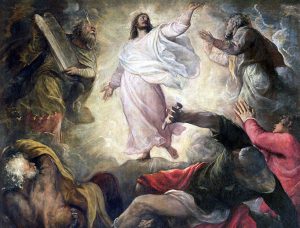
First, there is a movement that echoes the transfiguration account. This movement pertains to the biblical story when Moses received the fullness of the law on a mountain top at Mt. Sinai. Jesus, on the other hand, gave the “sermon of the Mount” in Matthew’s account. Both Moses and Jesus unfold the revelation of God in order to accept His power and absolute authority in our lives.

Second, Jesus together with His three disciples, climbed to the mountain top, to witness Jesus’ glory even before His death. This transfiguration speaks about the Lord’s Messianic Mission, the revelation of the Trinitarian life of God, and His prophetic fulfillment of God’s plan. Hence, the prize of glory to come for us is imminent.

Third, this event of Jesus’ Transfiguration revealed to Peter, James, and John, proposing challenges, especially to each one of us to embrace Christ’s mission. However, the temptation appears that to succumb to stay and build tents, as Peter suggests, would distract from that mission. We are beloved by a mighty God and called to continue our work for the fulfillment of salvation.

Today the principal message is the revelation and unfolding of what we hope for in Christ. It is also a sign encouraging us to hope for the transformation of the world. When confronted with our spiritual life, in many ways, it is a way of training our vision to see what is really there for us in glory. We pray for wisdom and strength to make this available to us.

The three apostles had accomplished greatness in their lives bringing this prophetic message of love, fraternal support, direction and made us aware the glory is available. Today we are encouraged to accept and listen to Him.

So, finally let us ask what is in our hearts as we follow St. Augustine’s admonition to search God interiorly; then, when we find Him, we are assured of internal transformation and possess God. Then we would say, “It is good for us to be here.”

God bless you.

Fr. Arlon, osa

———————————-

El Dictado del Corazón
Fiesta de la Transfiguración del Señor

  • Daniel 7:9-10, 13-14
  • Salmo 97:1-2, 5-6, 9
  • 2 Pedro 1:16-19
  • Mateo 17:1-9

Mientras escribo esta reflexión semanal “Dictado del corazón”, cada fiesta de la Transfiguración del Señor, recuerdo a uno de mis mejores amigos, el difunto Monseñor Romeo Violeta, en su cumpleaños terrenal. Ofrezco oración y misa por su eterno descanso. Me inspiré en él sobre cómo preparar una buena homilía. El mejor regalo que podía ofrecer al pueblo, además de celebrar la Eucaristía. Era un predicador dedicado. Que su alma descanse en el abrazo amoroso de Dios.

Esta fiesta de la Transfiguración del Señor ha sido celebrada por la Iglesia Oriental desde el siglo III, y la Iglesia Occidental incluyó esta fiesta desde el siglo XV hasta la actualidad. Entendemos la diferencia de tiempo en la inclusión de esta fiesta en el calendario litúrgico debido a su dedicación a la claridad de la enseñanza sobre la fe en Jesús. Este evento de la Transfiguración es parte de los escritos de Mateo, Marcos y Lucas, llamados evangelios sinópticos.

Nuestra primera lectura de hoy, del Libro de Daniel, es sobre un sueño que tuvo Daniel, donde vio una visión sobre la historia de Israel. El profeta Daniel entendió que a causa de esos líderes corruptos y extranjeros, los israelitas sufrieron mucho por sus manos abusivas de dominación y por imponer sus costumbres también sobre ellos. Sin embargo, animó al pueblo de Israel a que llegará el momento en que serán restaurados como el pueblo de Dios a través del Hijo del Hombre, para ser instalados, coronados y comisionados para recibir poder para reinar con una realeza eterna. Algo asombroso iba a ser revelado si tan solo mantuvieran la fe. Esta fe incluiría tanto confiar en su pasado como un pueblo guiado por Dios y su futuro como una continuación de la fidelidad de Dios.

En la segunda lectura de la segunda epístola de Pedro, leemos la convicción genuina de Pedro y la influencia de esa experiencia en la cima del monte Tabor, cuando hace referencia a escuchar la voz del cielo que decía: “Éste es mi Hijo muy amado, en quien tengo puestas mis complacencias; escúchenlo”. (2 Pedro 1:17) Su creencia había cambiado tremendamente por la forma en que testificó junto con otros Apóstoles; no hablaban el evangelio como un mito, sino una fe sincera como testigos de la majestad de Jesús como Dios.

Los invito a discernir las muchas lecciones valiosas que obtenemos de este relato de la Transfiguración del Señor:

Primero, hay un movimiento que hace eco del relato de la transfiguración. Este movimiento pertenece a la historia bíblica de cuando Moisés recibió la plenitud de la ley en la cima de una montaña en el Monte Sinaí. Jesús, por otro lado, dio el “sermón del monte” en el relato de Mateo. Tanto Moisés como Jesús despliegan la revelación de Dios para aceptar Su poder y autoridad absoluta en nuestras vidas.

En segundo lugar, Jesús junto con Sus tres discípulos subieron a la cima de la montaña para presenciar la gloria de Jesús incluso antes de Su muerte. Esta transfiguración habla de la Misión Mesiánica del Señor, la revelación de la vida trinitaria de Dios y Su cumplimiento profético del plan de Dios. Por lo tanto, el premio de gloria que vendrá para nosotros es inminente.

En tercer lugar, este acontecimiento de la Transfiguración de Jesús revelado a Pedro, Santiago y Juan, proponiendo desafíos, especialmente a cada uno de nosotros, para abrazar la misión de Cristo. Sin embargo, parece que la tentación de sucumbir a quedarse y construir tiendas de campaña, como sugiere Pedro, distraería la atención de esa misión. Somos amados por un Dios poderoso y llamados a continuar nuestro trabajo para el cumplimiento de la salvación.

Hoy el mensaje principal es la revelación y el despliegue de lo que esperamos en Cristo. Es también un signo que nos anima a esperar en la transformación del mundo. Cuando nos enfrentamos a nuestra vida espiritual, en muchos sentidos, es una forma de entrenar nuestra visión para ver lo que hay para nosotros en la gloria. Oremos por sabiduría y fortaleza para que esto esté disponible para nosotros. Los tres apóstoles habían cumplido en sus vidas al traernos este mensaje profético de amor, apoyo fraterno, dirección y hacer disponible el perdón de los demás. Hoy se nos anima a aceptarlo y escucharlo.

Finalmente, preguntémonos, qué hay en nuestros corazones mientras seguimos la admonición de San Agustín de buscar a Dios interiormente; entonces, cuando lo encontremos, estaremos seguros de la transformación interna y poseeremos a Dios. Entonces diremos: “Es bueno para nosotros estar aquí”.

Dios los bendiga.

Padre Arlón, osa
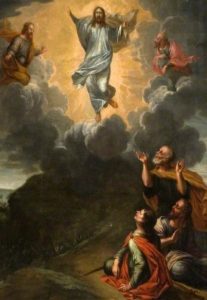
The Dictate of the Heart: The Lord’s Transfiguration, TLM

Today is the Feast of the Lord’s Transfiguration. Today’s scripture readings are filled with incredible imagery, which I claim to be one of my favorite scripture readings, in addition to our epistle which is also inspiring from the testimony of St. Peter.

In today’s epistle from St. Peter, we read of his genuine conviction and reaction. St. Peter says, “We have not followed cunningly devised fables, when we made known to you the power and the presence of Our Lord Jesus Christ: but having been made eyewitnesses of His majesty.” It means that St. Peter announced his personal conviction as he was transformed to preach about Jesus to others. The influence of that experience on top of Mount Tabor, as he references hearing the voice from heaven saying, “This is my Son, my beloved, with whom I am well pleased,” (2 Peter 1:17) is that his belief had changed tremendously by the way he testified together with other Apostles; they did not speak the gospel as myth but as wholehearted faith, as authentic witnesses of Jesus’ majesty as God.

I invite you to discern the many valuable lessons we get from this account of the Lord’s Transfiguration:

First, there is a movement that echoes the transfiguration account. This movement pertains to the biblical story when Moses received the fullness of the law on a mountain top at Mt. Sinai. Jesus, on the other hand, gave the “sermon of the Mount” in Matthew’s account. Both Moses and Jesus unfold the revelation of God in order to accept His power and absolute authority in our lives.

Second, Jesus together with His three disciples climbed to the mountain top, to witness Jesus’ glory even before His death. This transfiguration speaks about the Lord’s Messianic Mission, the revelation of the Trinitarian life of God, and His prophetic fulfillment of God’s plan. Hence, the prize of glory to come for us is imminent.

Third, this event of Jesus’ Transfiguration, revealed to Peter, James, and John, proposes challenges especially to each one of us to embrace Christ’s mission. However, the temptation appears that to succumb to stay and build tents, as Peter suggests, would distract from that mission. We are beloved by a mighty God and called to continue our work for the fulfillment of salvation.

Today the principal message is the revelation and unfolding of what we hope for in Christ. It is also a sign encouraging us to hope for the transformation of the world. When confronted with our spiritual life, in many ways, it is a way of training our vision to see that the road is really there for us in glory. We pray for wisdom and strength to make this available to us.

The glorious transformation and the intimate affirmation by God, I believe, did not only happen to Jesus, but to the three apostles with Him as well, in order to direct them to a greater mission. Peter suggested that building three tents would distract from that mission. We are beloved by a mighty God and called to continue working for man’s salvation. We need to be successful in our mission through love, support, and forgiveness which must be available in all circumstances. They are needed to actualize our mission with our keen attention to our prophetic message to the world which brings hope and to fix our eyes to the promise of God’s glory. May we pray for one another and recognize in one another the transformation for mission that God accomplishes through us, His Beloved.

Finally, let us ask what is in our hearts as we follow St. Augustine’s admonition to search God interiorly; then, when we find Him, we are assured of internal transformation and possess God. Then we would say, “It is good for us to be here.”

God bless you.

Fr. Arlon, osa

The Dictate of the Heart: 17th Week in Ordinary Time

The World Youth Day 2023, Lisbon, Portugal is ongoing and led by Pope Francis. There are thousands of young people from all over the world to gather together and journey together in faith. It is needed that our young ones must come to one dwelling place where God is present and accompanied in their search for meaning and relationship with God.

In our first reading today from the book of Exodus, Moses’ gesture of fidelity to God followed God’s instructions and commandments to make a dwelling place. It was a place where Moses placed the Arch of the Covenant. The Israelites cannot move forward when the Dwelling was covered by clouds. And during the night, “fire was seen in the cloud by the whole house of Israel in all the stages of their journey.”

In our life, we must remember that when we are covered with unfaithfulness, anxiety, and sins, we stumble and are paralyzed. We only move when we are fully reconciled with God.

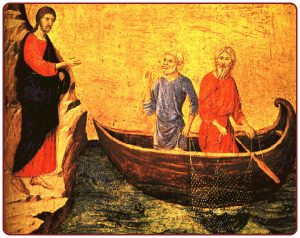
The gospel today is another parable about the Kingdom of Heaven from St. Matthew. It is likened to a net thrown away to catch all kinds of fish. God is generous to include all in His vision to be with Him in His kingdom. However, in the end, God separates the good and the bad.

Our attitude must be checked and the process of self-examination is indeed necessary. Does our life conform to His commands? Are we willing to influence others to be faithful to God?

Jesus fulfills the promises of God to us. He never rejects the old traditions but compliments them with His new insights. We must know how to discern the Word of God by asking the help of the Holy Spirit to enlighten us in our journey through life.

God bless you.

Fr. Arlon, osa

The Dictate of the Heart: 17th Sunday in Ordinary Time, Year A

We are at the end of the month of July going through a hot summer. Here in Reno, the city is preparing again for various activities. The upcoming two popular events are: “Hot August Nights”, which is the outdoor display of antique or vintage cars, and “Street Vibrations”, which is the coming out of motorcycles on the streets. These events are nationally known throughout the whole US. They bring more tourists to this area, and it is good for the local economy.

Today’s readings for this 17th Sunday in Ordinary Time remind us of ways to deepen our minds to be able to make right choices, and the need for wisdom to understand how we become pleasing to God by our fidelity to do His will. Not only that, but we strive to be a blessing to others at all times.

The first reading from the first book of Kings is a story about young Solomon when God appeared to him in a dream. God said to him, “Ask something of me and I will give it to you.” Solomon was quick to ask for “an understanding heart, to judge your people and to distinguish right from wrong.” God fulfilled this request by giving him the best gift, that is, the gift of wisdom and discernment, ”a heart so wise and understanding that there has never been anyone like you up to now, and after you there will come no one to equal.” Hence, if we believe that we have something that we want from God, it will be given to us according to His will. The more we are faithful to the Lord, God draws us closer to His heart. Psalm 69 says, “Turn to the Lord in your need, and you will live.” God’s heart is inclined to give us the best gift.

The Second reading from the letter of St. Paul to the Romans has a beautiful verse we need to memorize, St. Paul wrote, “Brothers and sisters: We know that all things work for good for those who love God, who are called according to his purpose.” I know that we are all called by God for a certain purpose, and because it comes from God, we expect that it is for our own good. God’s nature is Good, and so it is impossible that God would lead us to something that contradicts His very nature. If we are letting our hearts be possessed by God, and allowing His Spirit to live with us, we can truly clearly grasp our own purpose in life.

The gospel of St. Matthew presents a parable which is about discerning the true value of the Kingdom of Heaven in our spiritual life. By our pursuit of spiritual reality in life on earth, we won’t be poor and abandoned, for we lack nothing, for everything is given unto us if we seek His kingdom.

Let’s focus on these three examples of the Lord which seek these realities about the Kingdom of Heaven:

First, if someone finds a treasure buried in a field, a person has to sell his properties so that he can acquire the field where the treasure is in order to make a claim of ownership. At least we know that there is a future when we find the greater treasure which assures humanity of eternal blessings.

Second, “When he finds a pearl of great price, he goes and sells all that he has and buys it.” I believe that what is of prime importance to us is we could easily give up other things in favor of the greater value. In the same way, when we have found Jesus, who is more than a pearl, it is worth risking everything for Christ because He is our priceless pearl. To be able to search and find Christ, we regain our true identity as His adopted sons restoring our dignity.

Third, “The kingdom of Heaven is like a net thrown into the sea, which collects fish of every kind,….what is good is thrown into the bucket and the bad they throw away.” My understanding of this concept of heaven is that we are gathered together inside the net of God’s invitation thru His words. However, it calls my senses to be attentive and be attuned to my self-discovery and awareness. Some of us opt to a less committed outlook of our spiritual life and, therefore, are thrown away. Finding God is not anymore a potholed awareness; we enter into real conviction and intimacy with God.

In knowing about these parables of Jesus, it is necessary that we have constant discernment and an ongoing process of openness to His presence. Our intimacy with God is not a simple gesture of attraction and encounter, but rather it leads us to have greater attention that in everything small happening in our lives, we truly sense God’s love. Search the real treasure, sort it out, and find the priceless pearl. God is inviting us to intimacy in order to not be booted out.

God bless you.

Fr. Arlon, osa

—————————

El dictado del corazón:

Séptimo Domingo Del Tiempo Ordinario, Año A

  • 1 Reyes 3:5, 7-12
  • Salmo 119:57, 72, 76-77, 127-128, 129-130
  • Romanos 8:28-30
  • Mateo 13:44-52

Estamos a finales de julio y pasando por veranos calurosos. Aquí en Reno, la ciudad se está preparando nuevamente para diversas actividades. Los próximos dos eventos populares son: “Hot August Night”, que es la exhibición al aire libre de autos clásicos, antiguos y antiguos. La otra actividad es; “Street Vibrations”, que sale a la calle con motos. Estos dos eventos son conocidos a nivel nacional en todo Estados Unidos. Atrae más turistas a la zona y es bueno para la economía local. Debemos ayudar a nuestra comunidad.

Las lecturas de hoy para este decimoséptimo domingo del tiempo ordinario nos recuerdan formas de profundizar nuestras mentes para tomar mejores decisiones y la necesidad de sabiduría para comprender cómo llegamos a ser agradables a Dios por nuestra fidelidad para hacer su voluntad. No solo eso, sino que nos esforzamos por ser una bendición para los demás en todo momento.

La primera lectura del primer libro de Reyes es una historia sobre el joven Salomón cuando Dios se le apareció en un sueño. Dios le dijo: “Pídeme algo y te lo daré”. Salomón sabía lo que necesitaba y pidió “un corazón entendido, para juzgar al pueblo de Dios y distinguir el bien del mal”. Dios se complació con el pedido de Salomón y lo cumplió dándole a Salomón el mejor regalo, que era el don de la sabiduría y el discernimiento, un corazón tan sabio y entendido que nunca ha habido nadie como él hasta ahora, y después de ti no vendrá uno o igual.” Por eso, si tenemos algo que pedir a Dios y creer, Él nos lo dará conforme a Su voluntad. Cuanto más fieles seamos al Señor, Dios nos acercará más a Su corazón. El Salmo 69 dice: “Vuélvete al Señor en tu necesidad, y vivirás”. El corazón de Dios está inclinado a darnos el mejor regalo.

La segunda lectura de la carta de San Pablo a los Romanos tiene un versículo hermoso que necesitamos memorizar. San Pablo escribió: “Hermanos y hermanas: sabemos que a los que aman a Dios, todas las cosas les ayudan a bien, esto es, a los que conforme a su propósito son llamados”. Todos somos llamados por Dios para una determinada misión, y es para nuestro bienestar porque viene de Dios. La naturaleza de Dios es Buena, por lo que no sería imposible que Dios nos llevara a algo que contradiga Su misma naturaleza. Si permitimos que Dios entre en nuestro corazón y que su Espíritu habite en nosotros. Seríamos capaces de captar nuestro propósito en la vida.

El evangelio de San Mateo presenta una parábola sobre discernir el verdadero valor del Reino de los Cielos en nuestra vida espiritual. En nuestra búsqueda de la realidad espiritual en la vida en la tierra, no seremos pobres y abandonados, porque nada nos falta, porque todo nos es dado si buscamos Su reino.

Centrémonos en estos tres ejemplos del Señor que busca estas realidades sobre el Reino de los Cielos:

Primero, si alguien encuentra un tesoro enterrado en un campo, tendría que vender su propiedad para adquirir el campo donde está el tesoro para reclamar la propiedad. Al menos sabes que hay un futuro cuando encontremos el mayor tesoro que asegura a la humanidad bendiciones eternas.

Segundo, “Cuando encuentra una perla de gran precio, va y vende todo lo que tiene y la compra”. Creo que lo que es de primordial importancia para nosotros, fácilmente podríamos renunciar a otras cosas a favor del mayor valor. De la misma manera, cuando hemos encontrado a Jesús, que es más que una perla, vale la pena arriesgarlo todo por Cristo porque Él es nuestra perla invaluable. Para poder buscar y encontrar a Cristo, recuperamos nuestra verdadera identidad como su hijo adoptivo restaurando nuestra dignidad.

Tercero, “El reino de los cielos es como una red echada en el mar, que recoge peces de todas clases… lo bueno se echa en un balde y lo malo se tira”. Mi comprensión de este concepto del cielo es que estamos reunidos dentro de la red de la invitación de Dios a través de Sus palabras. Sin embargo, llama a mis sentidos a estar atentos y en sintonía con mi autodescubrimiento y conciencia. Algunos de nosotros optamos por una perspectiva menos comprometida en nuestra vida espiritual, por lo tanto, somos desechados. Encontrar a Dios ya no es más, una conciencia agujereada, entramos en una verdadera convicción e intimidad con Dios.

Nuestro conocimiento acerca de estas parábolas de Jesús, debemos tener un discernimiento constante y un proceso continuo de apertura a Su presencia. Nuestra intimidad con Dios no es un simple gesto de atracción y encuentro, sino que nos lleva a tener mayor atención para que en todo, aunque sea en las pequeñas cosas que suceden en nuestra vida, sintamos verdaderamente el amor de Dios. Busque el verdadero tesoro, ordénelo, encuentre la perla invaluable, Dios nos está invitando a la intimidad para encontrar esos tesoros celestiales.

Dios lo bendiga.

Padre Arlón, osa