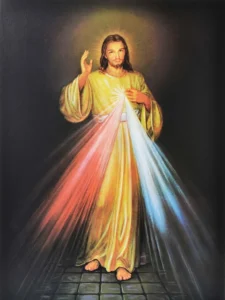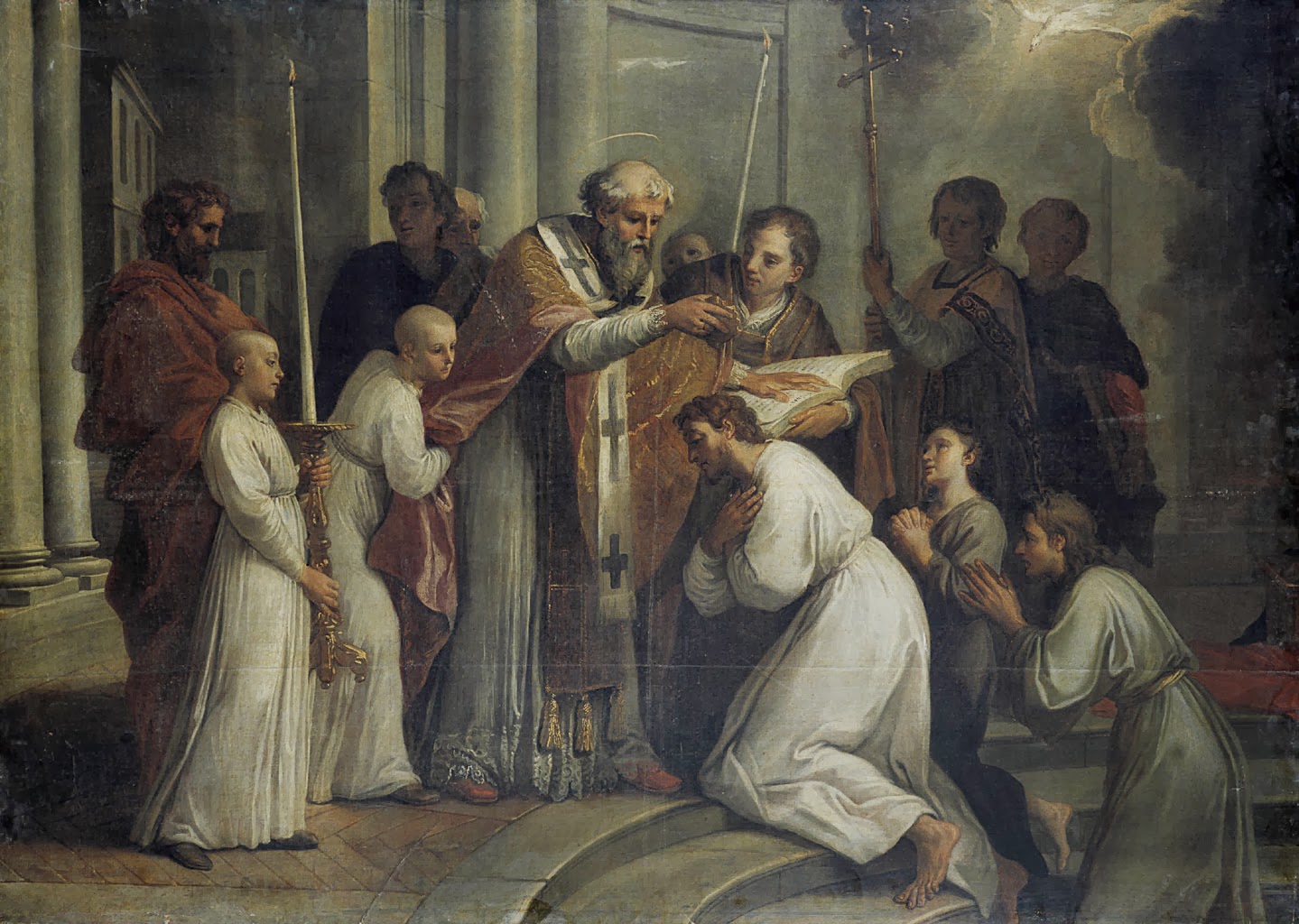
The Church’s liturgical calendar dedicates every Second Sunday of Easter to the celebration of Divine Mercy Sunday.
On April 10, 2026, the five-day Canonical Retreat of the Augustinian Sisters of Divine Love, which I had the privilege of facilitating, concluded. It was a fruitful event that renewed and strengthened their joy in community life, service, presence, and availability with Jesus, who is the source of joy in religious life. Their reflection was inspired by the Apostolic Exhortation Evangelii Gaudium of Pope Framcis. Throughout the retreat, confession and spiritual direction became essential elements of their spiritual renewal. The joy reflected on their faces after being immersed in Divine Love was truly evident. Indeed, God offers us an ocean of love and mercy.
Today’s feast of Divine Mercy, established by St. John Paul II in 2000, invites us to entrust ourselves completely to Jesus. Through the revelations given to St. Faustina Kowalska and the encouragement of St. John Paul II, the Church came to know more deeply the devotion to the Divine Mercy—Christ as the healer of our wounds and the inexhaustible fountain of mercy and grace.
The first reading from the Acts of the Apostles narrates how the early Christians grew in faith by living an intense life of prayer, fellowship, and the breaking of bread. These elements became the hallmark of their identity as followers of Jesus.
The second reading from the 1 Epistle of Peter encourages us to place our hope in the resurrection of Jesus Christ.
In the Gospel from gospel of John, we hear about one of the appearances of Jesus to His disciples after the discovery of the empty tomb. This is one of the most beautiful episodes of the resurrection narratives, particularly the moment when Thomas comes to believe after encountering the risen Lord. Several points for reflection emerge from this passage as we seek to understand the mystery of the resurrection.
First, the resurrection of Jesus remains a profound mystery. Yet His presence is not merely spiritual; it is also bodily. Like Mary Magdalene, who recognized Jesus when He called her by name, and like the two disciples on the road to Emmaus who recognized Him in the breaking of the bread, the disciples gradually came to understand that the risen Christ was truly alive. In today’s Gospel, we also see that in His resurrected body, Jesus transcends time, space, and physical barriers. He appears to the disciples even though the doors were locked. Standing before His apostles, He shows that nothing can hinder His presence. He has conquered death and is truly alive.
Second, Jesus greets His disciples with the gift of peace: “Peace be with you.” This greeting echoes the traditional Jewish greeting shalom. We can imagine how much the apostles needed to hear these words after they had abandoned Him in fear. Jesus then breathes on them and says, “Receive the Holy Spirit.” In doing so, He establishes the deep connection between the gift of the Holy Spirit and the forgiveness of sins. This moment reveals the foundation of the Sacrament of Reconciliation, the sacrament of Divine Mercy. Jesus commissions them with the words: “As the Father has sent me, so I send you.” Through this mission, the apostles and their successors continue Christ’s work of mercy and forgiveness. Jesus knows our human weakness and our constant need for forgiveness.
Third, the appearance of Jesus was astonishing to the disciples who had witnessed His crucifixion and burial. It had been a terrifying experience for them. Thomas’s doubt reflects our own human desire for tangible proof. He wanted clear evidence that the Jesus who appeared to the disciples was truly the same Jesus who had been crucified.
Thomas becomes a mirror of our own struggles with faith. Yet when he encounters Jesus, he becomes a powerful witness to the resurrection. His confession—“My Lord and my God”—is one of the most profound declarations of faith in the Gospel.
Our faith today rests upon the witness of the Church that has gone before us, beginning with Thomas and the first disciples. Through Baptism, we receive the same Holy Spirit that Jesus gave to them. We are among those whom Jesus calls “blessed,” because we believe without having seen.
It is not because of what we have done, but because of what the merciful Christ has done, that heaven is opened to us. We seek God only because God first seeks us.
God patiently waits for us and walks with us over the long journey of our lives. The pierced Heart of Jesus reveals how far His love is willing to go for humanity. His mercy is like an ocean—boundless and without limit.
May we respond sincerely to God’s invitation and confess with Thomas: “My Lord and my God.”
Jesus, I trust in You. Let us join Pope Leo praying for World’s Peace.
Fr. Arlon, OSA