Today the Church celebrates Laetare Sunday, a moment of quiet joy in the midst of our Lenten journey. The word Laetare means “Rejoice.” In the middle of our penance, sacrifices, and spiritual struggles, the Church invites us to pause, breathe deeply, and remember the joy that awaits us in the light of Christ.
Personally, this Sunday has a special meaning for me. Over the past days, I have been giving a spiritual retreat to religious sisters who are preparing for their simple and solemn profession. Today the retreat concludes. It has been both exhausting and deeply enriching. As their spiritual guide, I have witnessed something very beautiful—the sincerity of their commitment and the quiet courage with which they respond to God’s call.
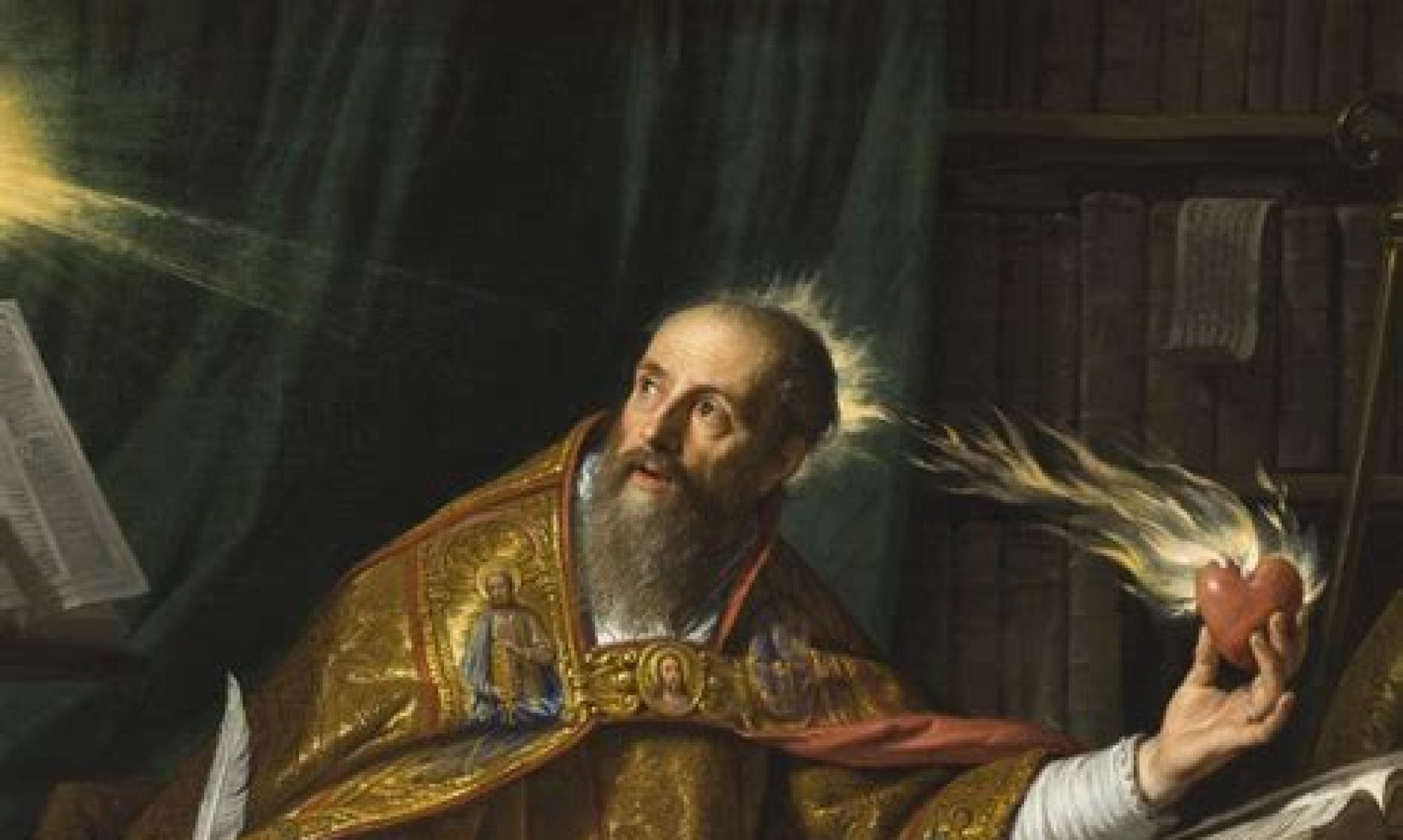
Experiences like this remind me how gracious God is in choosing people—priests, religious sisters, missionaries, and all who dedicate their lives to Him—to become instruments of His love and mercy in the world. Yet when God chooses someone, He does not look first at external appearances, achievements, or status. God looks into the heart.
The heart, in the biblical sense, is the deepest center of the person—the place where decisions are made and where the will of God is either embraced or resisted.
God Looks Into the Heart. This truth is clearly revealed in the first reading from the First Book of Samuel.
The prophet Samuel is sent by God to anoint a new king for Israel. When Samuel sees the sons of Jesse, he is immediately impressed by their appearance. Eliab, the eldest, looks strong and kingly. But God corrects Samuel with these powerful words: “Not as man sees does God see, because man sees the appearance, but the Lord looks into the heart.” Eventually, the youngest son, David is brought before Samuel. David is not the obvious choice. He is the youngest, a simple shepherd boy, unnoticed even by his own family. Yet it is David whom God chooses and anoints as king. Why? Because David possesses something that cannot be seen by the human eye: a heart open to God.
The story reminds us that God’s criteria are very different from ours. We often judge by appearances, talent, reputation, influence—but God searches deeper. He sees the inner disposition of the person, the sincerity of one’s love, and the willingness to follow His will.
The second reading, from the Letter of St. Paul to the Ephesians, continues this theme but expresses it in another way: the contrast between darkness and light. St. Paul tells the Christians: “You were once darkness, but now you are light in the Lord.”
To live in darkness means to live in sin, hiddenness, and shame. Even when such actions are done secretly, they cannot bear the fruits of goodness,righteousness, and truth.
A life separated from God inevitably leads to darkness of the heart. But Paul reminds us that Christ is the light who transforms us. His presence exposes what is hidden and brings healing where there was once blindness.
Because of our baptism, we are not merely receivers of this light, we are called to reflect it. Christians have a prophetic responsibility: to expose the works of darkness and to illuminate the world with the truth of Christ.
This is not always easy. Living in the light requires honesty, humility, and courage.
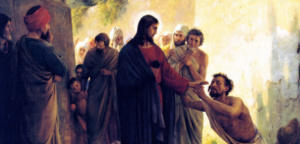
The Gospel from John presents one of the most powerful miracle stories of Jesus: the healing of the man born blind.
As Jesus encounters this blind man, the disciples ask a question that reflects a common belief of their time: “Rabbi, who sinned, this man or his parents, that he was born blind?” In other words, they assume that suffering must be a punishment for sin. But Jesus rejects this assumption. He says that the man’s blindness is not a punishment. Rather, through this situation the works of God will be revealed.
Jesus then performs a very unusual action. He spits on the ground, makes clay with the dust, places it on the man’s eyes, and tells him to wash in the pool of Siloam. When the man obeys, he receives his sight.
This gesture of Jesus is rich in symbolism. By mixing saliva and clay, Jesus echoes the creation story in the Book of Genesis, where God forms humanity from the dust of the earth. In this miracle, Jesus acts with the same creative authority of God Himself. It is as if Jesus is saying: “I am the one who gives sight. I am the one who recreates life.”
But the real drama of the story is not the physical blindness of the man. The deeper blindness belongs to the Pharisees. Despite witnessing the miracle, they refuse to believe in Jesus. They interrogate the man, question his parents, and even accuse Jesus of being a sinner. Their hearts are so fixed on their own religious assumptions that they cannot recognize the truth standing before them.
Ironically, the blind man gradually begins to see more clearly than they do. At first, he simply knows that Jesus healed him. Later, he calls Jesus a prophet. Then he declares that Jesus is a man sent from God.
Finally, when Jesus reveals Himself, the man responds with faith: ” Lord, I believe.”And he worships Him.
What a beautiful journey of faith from blindness to sight, from confusion to belief.
This Gospel invites us to ask a very personal question: What kind of blindness might exist in our own lives?
Not all blindness is physical. Many people can see perfectly with their eyes, yet their hearts remain blind.
Sometimes we are blinded by prejudices.
Sometimes by pride or self-righteousness.
Sometimes by resentment or bitterness toward others. We may fail to see the goodness in our neighbor, our coworkers, our family members, or even in those who disagree with us.
The Pharisees were convinced that they already possessed the truth. Because of that certainty, they closed themselves to the newness that God was revealing in Jesus. And the same danger can exist for us.
This Gospel speaks to me in a very personal way. In my own life, I have undergone four operations on my eyes. There were moments when I truly experienced physical blindness and uncertainty.
But those experiences also taught me something deeper. Physical blindness is not always the greatest darkness. Sometimes God allows certain limitations in our lives—not as punishment, but as a way for us to discover Him more deeply.
In my own struggles, I learned that seeing with the eyes is important, but seeing with the heart is even more important.
Jesus comes to liberate us from whatever blinds us. He invites us to live as children of the light.
To do this, we must cultivate a listening heart, one guided by the Holy Spirit and open to the truth. Living in the light demands honesty, humility, and the courage to recognize both our weaknesses and God’s grace at work in our lives.
When our hearts are open to Christ, we begin to see differently. We see people not as enemies but as brothers and sisters. We see suffering not merely as burden but sometimes as a path to deeper faith. And we see our lives not simply as ordinary routines but as part of God’s loving plan.
Today’s readings remind us of a profound truth: God looks into the heart.
He is not impressed by appearances, achievements, or external success. What matters most to Him is the sincerity of our love and our willingness to believe.
Like the blind man in the Gospel, we are invited to move step by step toward deeper faith until we too can say with conviction:” Lord, I believe.”
May Christ, the light of the world, open our eyes and enlighten our hearts so that we may truly see God, our neighbor, and ourselves in His light. And may we always walk as children of the light.
God bless you.
Fr. Arlon, OSA