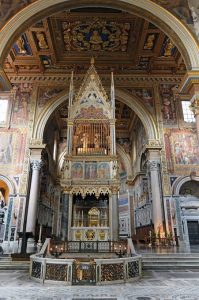
Today, we celebrate the Feast of the Dedication of the Lateran Basilica. This celebration symbolizes our unity as Catholics. We are united with the Bishop of Rome in commemorating the dedication of the first official Church, known as the Mother of All Churches—St. John Lateran. Built by Emperor Constantine on the Lateran Hill, it serves as the Pope’s main church, not St. Peter’s Basilica. Today marks a special moment in the history of Christianity.
In the first reading, the prophet Ezekiel recounts his vision of being led by an angel into the temple in Jerusalem. There, he witnesses life-giving water flowing from the temple—an image of God’s blessing and presence that brings life and renewal.
In the second reading, St. Paul reminds the Corinthians that they themselves are the living temple of God, built upon the foundation of Jesus Christ. This temple is not made of lifeless stones but of living, Spirit-filled people, with Christ Himself as its cornerstone.
In the Gospel, taken from St. John, Jesus cleanses the temple because it is the house of God. Yet, this temple is not merely a physical structure—it represents the people of God, His Body. Jesus desires to purify this temple, for it is not only made of stone but animated by the Spirit of God dwelling within each person.
As I reflect on the readings, I found three important lessons from this Sunday’s Gospel.
First, the new temple of God is not made by human hands but by God Himself, with Jesus as its foundation. This temple is the universal Church—the people of God—the true and living dwelling place of the Lord, His Mystical Body.
Second, some may question Jesus’ actions toward the merchants in the temple. However, His anger was not rooted in malice or violence, but in holy zeal and righteous frustration. The people had desecrated the sacred place where God’s presence was meant to dwell. Jesus was asserting His divine authority to cleanse and restore the temple as a place of encounter with God.
Scripture tells us that if the temple were destroyed, Jesus would raise it again in three days. This prophecy points to His resurrection—the creation of a new, eternal, and perfect temple: His risen Body.
Third, today’s feast invites us to recognize that we are the new temple of God. It is an opportunity to rededicate ourselves, renewing our consecration to God as His living and holy presence on earth. What a great joy it is that God chooses to dwell within us—to make His home in us, to strengthen us, to help us, to fill us with His joy, and to make our joy complete.
When we fail to respect one another, we desecrate the Church itself. Darkness takes the place of light. In such moments, we are called to reparation—to change our hearts and renew our perspective. Jesus’ resurrection changes everything; it reveals that we are God’s living temples, where the Risen Lord, together with the Father and the Holy Spirit, truly dwells.
Let us ask ourselves:
How can I better reflect God’s presence to others? What do I truly think about the Church today?
Always be mindful that, as the living Body of Christ, we need the three E’s: Ecclesial, which means we are in communion with Jesus; Eucharistic, which means not merely celebrating the Mass but sharing Christ’s Body and Blood with a willingness to serve and sacrifice; and finally, Evangelium, which means that as disciples, we not only hear the Word of God but also live it out in word and deed.
May God dwell within us always, for He desires to be in a living relationship with each of us.
God bless you,
Fr. Arlon, OSA
El Dictado del Corazón: Fiesta de la Dedicación de la Basílica de Letrán y el 32º Domingo del Tiempo Ordinario, Año C
- Ezequiel 47, 1–2.8–9.12
- Salmo 45, 2–3.5–6.8–9
- 1 Corintios 3, 9c–11.16–17
- Juan 2, 13–22
Hoy celebramos la Fiesta de la Dedicación de la Basílica de Letrán. Esta celebración simboliza nuestra unidad como católicos. Nos unimos al Obispo de Roma para conmemorar la dedicación de la primera iglesia oficial, conocida como la Madre de todas las Iglesias, San Juan de Letrán. Construida por el emperador Constantino en la colina de Letrán, esta basílica es en realidad la iglesia principal del Papa, no la de San Pedro. Hoy recordamos un momento muy especial en la historia del cristianismo.
En la primera lectura, el profeta Ezequiel nos relata su visión de ser guiado por un ángel al templo de Jerusalén. Allí contempla cómo brota agua viva del templo, imagen de la bendición y la presencia de Dios, que da vida y renovación.
En la segunda lectura, san Pablo recuerda a los corintios que ellos mismos son el templo vivo de Dios, edificado sobre el fundamento que es Jesucristo. Este templo no está hecho de piedras sin vida, sino de personas vivas, llenas del Espíritu, con Cristo mismo como piedra angular.
En el Evangelio según san Juan, Jesús purifica el templo porque es la casa de Dios. Sin embargo, este templo no es solo una estructura física: representa al pueblo de Dios, su Cuerpo. Jesús desea purificar este templo, pues no está hecho únicamente de piedra, sino animado por el Espíritu de Dios que habita en cada persona.
Al reflexionar sobre las lecturas, encontré tres enseñanzas importantes en el Evangelio de este domingo:
Primero, el nuevo templo de Dios no está hecho por manos humanas, sino por el mismo Dios, con Jesús como su fundamento. Este templo es la Iglesia universal, el pueblo de Dios, la verdadera y viva morada del Señor, su Cuerpo Místico.
Segundo, algunos podrían cuestionar las acciones de Jesús contra los comerciantes en el templo. Sin embargo, su enojo no nace de la malicia ni de la violencia, sino del celo santo y de la justa indignación. El pueblo había profanado el lugar sagrado donde debía habitar la presencia de Dios. Jesús afirma su autoridad divina al limpiar y restaurar el templo como un lugar de encuentro con Dios.
La Escritura nos dice que si el templo fuera destruido, Jesús lo levantaría de nuevo en tres días. Esta profecía se refiere a su resurrección, la creación de un templo nuevo, eterno y perfecto: su Cuerpo resucitado.
Tercero, la fiesta de hoy nos invita a reconocer que nosotros somos el nuevo templo de Dios. Es una oportunidad para rededicarnos, renovando nuestra consagración a Dios como su presencia viva y santa en la tierra. ¡Qué alegría tan grande saber que Dios elige habitar en nosotros! Que quiere hacer su morada en nuestro corazón, fortalecernos, ayudarnos, llenarnos de su gozo y hacer pleno nuestro gozo.
Cuando dejamos de respetarnos unos a otros, profanamos la misma Iglesia. La oscuridad toma el lugar de la luz. En esos momentos, estamos llamados a la reparación, a cambiar el corazón y renovar nuestra mirada. La resurrección de Jesús lo cambia todo; nos revela que somos templos vivos de Dios, donde el Señor Resucitado, junto con el Padre y el Espíritu Santo, verdaderamente habita.
Preguntémonos:
¿Cómo puedo reflejar mejor la presencia de Dios a los demás?
¿Qué pienso verdaderamente de la Iglesia hoy?
Siempre tengamos presente que, como Cuerpo vivo de Cristo, necesitamos las tres E: Eclesial, que significa que estamos en comunión con Jesús; Eucarística, que significa no solo celebrar la Misa sino compartir el Cuerpo y la Sangre de Cristo con voluntad de servir y sacrificarnos; y finalmente, Evangelium, que significa que, como discípulos, no solo escuchamos la Palabra de Dios sino que también la vivimos de palabra y obra.
Que Dios habite siempre en nosotros, pues Él desea tener una relación viva con cada uno de nosotros.
Dios los bendiga,
P. Arlon, OSA