The Dictate of the Heart: 5th Sunday of Lent, Year A

The world today is facing the serious effects of conflict involving the United States, Israel, and Iran. This military action, known as “Operation Epic Fury,” is affecting people across the globe. Many nations are already experiencing economic hardship as gasoline and oil prices continue to rise. Soon, food and other basic commodities may also become more expensive.

Where is the direction of the world today? If no resolution through peace talks is reached, the conflict could escalate further. What we hear in Scripture about “nation rising against nation” (Mt. 24:7) seems increasingly possible.

However, even in times of uncertainty, sorrow, and fear, we continue to seek courage and hope. In the face of death and suffering, we look for guidance so that we may live in faith and share love with others.

Today’s readings remind us that true life comes from the very source of Life—God, who has the power to bring life even from death.

In the first reading from the Book of Ezekiel, the prophet proclaims that God will open the graves and restore the people of Israel. This promise reveals God’s power to bring life where there seems to be none.

In the second reading from the Letter to the Romans, St. Paul strengthens the believers’ trust by reminding them that the Spirit of God dwells within each of us. The same Spirit who raised Jesus from the dead now gives life to those who believe in Him.

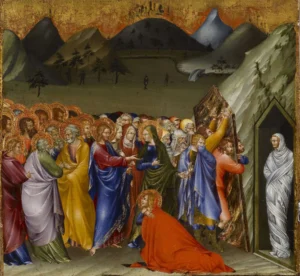
In today’s gospel, the evangelist John narrates the powerful story of Jesus raising Lazarus from the dead. This miracle is one of the great “signs” in John’s gospel, inviting us to reflect on what it truly means to call Jesus the Resurrection and the Life.

There are several important lessons that strengthen our faith in Jesus.

First, people were pressing Jesus to declare plainly whether He was the Messiah. Instead of simply answering, Jesus pointed them to His works—works that testify that He came from God and reveal His true identity.

Second, Mary and Martha, the sisters of Lazarus, sent word to Jesus that their brother was ill, and later that he had died. Although Jesus loved Mary, Martha, and Lazarus, He delayed His coming for two days. This delay may have been due to the danger in going to Bethany or because Jesus was still engaged in His ministry to the people. Nevertheless, Jesus remained obedient in fulfilling His Father’s will despite the obstacles. By restoring Lazarus to life, Jesus ultimately glorified the Father.

Third, when Jesus arrived in Bethany, He was deeply moved. Martha approached Him with sorrow, saying that if He had been there, Lazarus would not have died. Yet she still expressed confidence that God would grant whatever Jesus asked. She professed her belief in the resurrection on the last day. Later, Mary came with the same faith and sorrow. Jesus then went to the tomb, prayed, and called Lazarus out from it. Because of this sign, many came to believe in Him. However, when the Jewish authorities heard of this miracle, it stirred their intention to act against Jesus.

Fourth, the raising of Lazarus foreshadows the good news of Jesus’ own Resurrection. Jesus’ fidelity and obedience to the will of the Father eventually led to strong opposition from the authorities and resulted in His death. Yet this miracle reveals Jesus’ power over death so that when we die, all believers may remember and find hope.

Fifth, just as Jesus commanded that the stone be rolled away from Lazarus’ tomb, the disciples would later discover the stone rolled away from Jesus’ own tomb. For Jesus no obstacles prevent Him to accomplish His salvific mission.

Through our Baptism, we too are restored from death caused by sin to new life, which unites us with Christ who conquered death once and for all. Because of this victory, those who believe in Him share in eternal life. Like Martha and Mary, we are called to profess our faith that Jesus is truly the Resurrection and the Life.

This message clearly points to our own resurrection on the last day, when the Lord will give life to all who belong to Him.

The story of Lazarus reveals the tremendous power of Jesus. On the last day, Christ will call us forth from our graves as His friends—if we have lived in friendship with Him. As our Lord, He will command us to come out of the tomb and enter into the resurrection of the dead, the new creation, and the life of the world to come.

Even amid the darkness and turmoil of our world today, Jesus continues to bring new life. Just as He called Lazarus out of the tomb, He calls each of us out of darkness into the light of life.

Therefore, I sincerely encourage you to offer a simple prayer each day, asking Jesus for the healing of our world, that lasting peace and new life may prevail.

God bless you.

Fr. Arlon, OSA
The Dictate of the Heart: 4th Sunday of Lent, Year A (Laetare Sunday)

Today the Church celebrates Laetare Sunday, a moment of quiet joy in the midst of our Lenten journey. The word Laetare means “Rejoice.” In the middle of our penance, sacrifices, and spiritual struggles, the Church invites us to pause, breathe deeply, and remember the joy that awaits us in the light of Christ.

Personally, this Sunday has a special meaning for me. Over the past days, I have been giving a spiritual retreat to religious sisters who are preparing for their simple and solemn profession. Today the retreat concludes. It has been both exhausting and deeply enriching. As their spiritual guide, I have witnessed something very beautiful—the sincerity of their commitment and the quiet courage with which they respond to God’s call.

Experiences like this remind me how gracious God is in choosing people—priests, religious sisters, missionaries, and all who dedicate their lives to Him—to become instruments of His love and mercy in the world. Yet when God chooses someone, He does not look first at external appearances, achievements, or status. God looks into the heart.

The heart, in the biblical sense, is the deepest center of the person—the place where decisions are made and where the will of God is either embraced or resisted.

God Looks Into the Heart. This truth is clearly revealed in the first reading from the First Book of Samuel.
The prophet Samuel is sent by God to anoint a new king for Israel. When Samuel sees the sons of Jesse, he is immediately impressed by their appearance. Eliab, the eldest, looks strong and kingly. But God corrects Samuel with these powerful words: “Not as man sees does God see, because man sees the appearance, but the Lord looks into the heart.” Eventually, the youngest son, David is brought before Samuel. David is not the obvious choice. He is the youngest, a simple shepherd boy, unnoticed even by his own family. Yet it is David whom God chooses and anoints as king. Why? Because David possesses something that cannot be seen by the human eye: a heart open to God.

The story reminds us that God’s criteria are very different from ours. We often judge by appearances, talent, reputation, influence—but God searches deeper. He sees the inner disposition of the person, the sincerity of one’s love, and the willingness to follow His will.

The second reading, from the Letter of St. Paul to the Ephesians, continues this theme but expresses it in another way: the contrast between darkness and light. St. Paul tells the Christians: “You were once darkness, but now you are light in the Lord.”

To live in darkness means to live in sin, hiddenness, and shame. Even when such actions are done secretly, they cannot bear the fruits of goodness,righteousness, and truth.

A life separated from God inevitably leads to darkness of the heart. But Paul reminds us that Christ is the light who transforms us. His presence exposes what is hidden and brings healing where there was once blindness.

Because of our baptism, we are not merely receivers of this light, we are called to reflect it. Christians have a prophetic responsibility: to expose the works of darkness and to illuminate the world with the truth of Christ.

This is not always easy. Living in the light requires honesty, humility, and courage.

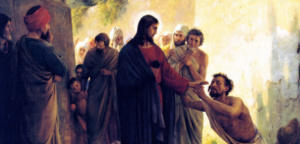
The Gospel from John presents one of the most powerful miracle stories of Jesus: the healing of the man born blind.

As Jesus encounters this blind man, the disciples ask a question that reflects a common belief of their time: “Rabbi, who sinned, this man or his parents, that he was born blind?” In other words, they assume that suffering must be a punishment for sin. But Jesus rejects this assumption. He says that the man’s blindness is not a punishment. Rather, through this situation the works of God will be revealed.

Jesus then performs a very unusual action. He spits on the ground, makes clay with the dust, places it on the man’s eyes, and tells him to wash in the pool of Siloam. When the man obeys, he receives his sight.

This gesture of Jesus is rich in symbolism. By mixing saliva and clay, Jesus echoes the creation story in the Book of Genesis, where God forms humanity from the dust of the earth. In this miracle, Jesus acts with the same creative authority of God Himself. It is as if Jesus is saying: “I am the one who gives sight. I am the one who recreates life.”

But the real drama of the story is not the physical blindness of the man. The deeper blindness belongs to the Pharisees. Despite witnessing the miracle, they refuse to believe in Jesus. They interrogate the man, question his parents, and even accuse Jesus of being a sinner. Their hearts are so fixed on their own religious assumptions that they cannot recognize the truth standing before them.

Ironically, the blind man gradually begins to see more clearly than they do. At first, he simply knows that Jesus healed him. Later, he calls Jesus a prophet. Then he declares that Jesus is a man sent from God.
Finally, when Jesus reveals Himself, the man responds with faith: ” Lord, I believe.”And he worships Him.

What a beautiful journey of faith from blindness to sight, from confusion to belief.

This Gospel invites us to ask a very personal question: What kind of blindness might exist in our own lives?

Not all blindness is physical. Many people can see perfectly with their eyes, yet their hearts remain blind.

Sometimes we are blinded by prejudices.
Sometimes by pride or self-righteousness.
Sometimes by resentment or bitterness toward others. We may fail to see the goodness in our neighbor, our coworkers, our family members, or even in those who disagree with us.

The Pharisees were convinced that they already possessed the truth. Because of that certainty, they closed themselves to the newness that God was revealing in Jesus. And the same danger can exist for us.

This Gospel speaks to me in a very personal way. In my own life, I have undergone four operations on my eyes. There were moments when I truly experienced physical blindness and uncertainty.

But those experiences also taught me something deeper. Physical blindness is not always the greatest darkness. Sometimes God allows certain limitations in our lives—not as punishment, but as a way for us to discover Him more deeply.

In my own struggles, I learned that seeing with the eyes is important, but seeing with the heart is even more important.

Jesus comes to liberate us from whatever blinds us. He invites us to live as children of the light.

To do this, we must cultivate a listening heart, one guided by the Holy Spirit and open to the truth. Living in the light demands honesty, humility, and the courage to recognize both our weaknesses and God’s grace at work in our lives.

When our hearts are open to Christ, we begin to see differently. We see people not as enemies but as brothers and sisters. We see suffering not merely as burden but sometimes as a path to deeper faith. And we see our lives not simply as ordinary routines but as part of God’s loving plan.

Today’s readings remind us of a profound truth: God looks into the heart.

He is not impressed by appearances, achievements, or external success. What matters most to Him is the sincerity of our love and our willingness to believe.

Like the blind man in the Gospel, we are invited to move step by step toward deeper faith until we too can say with conviction:” Lord, I believe.”

May Christ, the light of the world, open our eyes and enlighten our hearts so that we may truly see God, our neighbor, and ourselves in His light. And may we always walk as children of the light.

God bless you.

Fr. Arlon, OSA

The Dictate of the Heart: 3rd Sunday of Lent, Year A

The Third Sunday of Lent, Year A, calls us to open our hearts to God’s grace. As we continue to deepen our discipline of intense prayer, fasting, and penance, we are also invited to offer another sacrifice so that this Lenten season may become more meaningful. That sacrifice is to pray earnestly for an immediate ceasefire in the Middle East, involving Israel, America, and Iran.

I agree with the call of Pope Leo XIV for leaders to engage in dialogue, because going to war is not the solution; rather, it aggravates division and conflict. More innocent people suffer, and hatred continues to intensify. This season is an ideal time to deepen our Lenten practices so that the world may draw closer to God and reflect on what truly satisfies the human heart—much like Jesus’ offer of “living water” to the Samaritan woman.

Many people today are experiencing sadness and anxiety because of the growing number of killings. Families mourn loved ones, and soldiers have died as collateral damage in ongoing conflicts. At the same time, many perspectives have emerged raising concerns about the morality of these aggressive actions on both sides. Some would say such actions are immoral; others defend them based on political alignments. Moralists attempt to analyze the situation through the lens of the “Just War Theory.”

I know many who are weary—tired of being cast aside or looked upon with suspicion. Personally, I believe that an evil regime must be confronted, based on the historical reality that such regimes rarely come to the table for sincere conflict resolution. Too often, they stand on the side of darkness rather than dialogue. Perhaps one day the world will recognize and be grateful to those who stand firmly to protect the principles of a civilized world—a world that upholds peace, love, and unity.

This is precisely the reason Jesus came into the world. Even His enemies were given the freedom to choose between good and evil. Jesus treated His enemies with compassion and mercy, yet He also set clear boundaries. Thus, we must awaken both our minds and our hearts.

Today, we live in a world thirsting for answers—struggling with anxiety, wondering whom and what to trust, and longing for justice and peace to prevail.

Scripture today reminds us that even Jesus became tired. Perhaps He, too, was weary of division and thirsted for the realization of the new earth—the Kingdom of God—here and now.

All the readings today invite us to listen to His voice. I urge openness to His voice today, unlike our ancestors who hardened their hearts despite witnessing His mighty works.

In the first reading from the Book of Exodus, the Israelites grow angry with Moses. They begin to doubt God’s presence among them. In response, God instructs Moses to go to Horeb and strike the rock, miraculously providing water for the thirsty people. The place was called Massah and Meribah.

In the second reading from the Letter of Paul to the Romans, Paul exhorts believers that through faith we stand on the side of God, gaining peace and the hope of sharing in His glory. Through the Holy Spirit we receive God’s love—a love that confirms our hope, manifested in Christ who died for all of us, even while we were still sinners.

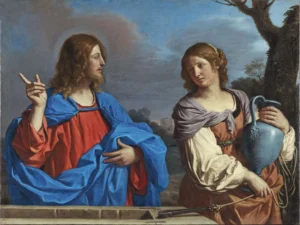
In the Gospel of John, we hear the inspiring story of the Samaritan woman. It is a moving dialogue between two tired individuals at the well under the scorching heat of the noonday sun—an encounter between Jesus and the Samaritan woman.

Let us focus on three important lessons from this encounter, though the Gospel reveals many more profound truths.

First, the Samaritan woman remains curious about Jesus. Without hesitation, she engages Him in conversation. They discuss real differences in politics, worship, and their understanding of God. They look at Scripture and tradition together. They enter into dialogue while honoring one another’s human dignity and looking toward the future with hope.

This is true evangelization. Jesus offers her hope, truth, and new life. She deeply senses that Jesus has changed her life, making her ready to share what she has discovered.

Jesus meets the Samaritan woman where she is, despite her sins and her past. This reminds us that God does not turn away from us because of our sins. Instead, He invites us to receive His mercy so that we may be transformed.

Second, in this encounter the Samaritan woman finds Christ, and she cannot contain her joy. She leaves her water jar behind and immediately runs to tell others the good news. Because of her testimony, many come to believe that Jesus is the Messiah.

Third, the Samaritan woman proclaims, “Come and see a man who told me everything I have ever done!” Many people leave their town just to see Jesus. This movement shows a decisive response of faith.

The woman becomes instrumental in fulfilling the missionary mandate—something no one in the village had dared to do before. She becomes the first messenger of the Good News among the Samaritans. Historically, Samaritans and Jews avoided one another and rarely met face to face. Yet Jesus restores her voice and her dignity.

This encounter at the well gives meaning to the many small gestures of daily life that connect us to one another.

The symbolism of leaving her jar at the well represents the abandonment of her old prejudices and burdens, making way for the newly discovered “Living Water,” which signifies her new life in Christ.

In the same way that God provided water to the Israelites in the desert, and offered living water through Jesus to the Samaritan woman, He points us toward something deeper in life. God desires to satisfy our thirst for meaning and truth.

God remains faithful, even when we struggle to understand the present geopolitical conflicts in the Middle East and in other parts of the world. We must trust that He is in control, even beyond our human comprehension.

Let us continue to engage in dialogue together—like Jesus and the Samaritan woman—at the periphery of the well, where sincere hearts meet and truth is revealed.

God bless you.

Fr. Arlon, OSA

The Dictate of the Heart: 2nd Sunday of Lent, Year A

We enter the first day of the month of March with the 2nd Sunday of Lent, Year A, in the Church’s liturgical calendar.

Our journey through Lent strengthens us in our quest for perseverance and the willingness to triumph over temptation and mediocrity. It opens our often fixed minds to the power of a merciful God.

Today’s readings focus on God’s promise of salvation and, by His grace, strengthen our faith—a faith that calls us to action.

In the first reading from the Book of Genesis, we hear about God’s promise of abundant blessings to Abram. It describes the transformation of a pagan patriarch into a believer in the one true God. His name was changed from Abram to Abraham, signifying his growth from the father of a small family to the father of a great nation. This great transformation began through God’s mercy and depended on Abram’s trust in Him. All Abram had to do was obey the Lord’s command and he did so.

In the second reading, from the First Letter of St. Paul to Timothy, Paul reminds us that God makes His grace available to those who fully trust Him, enabling them to grow in holiness. God “called us to a holy life.” Paul humbly insists that holiness is not something we can achieve on our own; it is the work of God within a community. It is God’s design for all humanity through Jesus Christ.

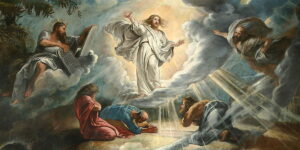
In the Gospel according to St. Matthew, we hear of one of the most important events in the life of Jesus: the Transfiguration. This event is also reported in the three Synoptic Gospels: Mark, Luke, and Matthew. To understand Matthew’s account of the Transfiguration, we must remember its context. Matthew places this story just after Jesus asks His disciples, “Who do you say that I am?” When Peter declares that Jesus is the Messiah, Jesus orders him to keep silent.

The word “Transfiguration” is not commonly used in everyday speech. If someone goes to the barber or salon for a makeover, we would not usually say, “You look transfigured today.” The word is reserved for something extraordinary. In Scripture, it is used to describe the striking change in Jesus’ appearance, revealing a glimpse of the glory of His Resurrection in the presence of John, Peter, and James—the inner circle of His apostles.

The lesson we draw from this Gospel passage leads us to a profound theological understanding.

First, a voice affirms that Jesus is God’s Son, echoing the voice heard at His baptism. On the mountain, Jesus reveals His identity once again when a bright cloud overshadows them and a heavenly voice, God the Father, declares, “This is my beloved Son, in whom I am well pleased; listen to him.” The Transfiguration is indeed a revelation of who Jesus truly is—a narrative we call a “Christophany.” It gives us a glimpse of the heavenly glory awaiting all who do God’s will by placing their trust and faith in Him.

Second, Moses and Elijah appear with Jesus on the mountain. How do we understand this? Their presence shows that this event is deeply connected to God’s relationship with the people of Israel. Moses and Elijah represent the Law and the Prophets, respectively. In the revelation and presence of the Beloved Son, Jesus completes and fulfills God’s Word.

Although the apostles wish to preserve the vision, Jesus commands them not to tell anyone about their experience. This reminds them not to proclaim Him as the Messiah prematurely, before the proper time.

St. Augustine, in one of his sermons, affirms that “after the Resurrection, neither Moses nor Elijah is seen. Only Jesus remains, for the Law and the Prophets have borne witness to Christ, who was destined to suffer, to rise again from the dead on the third day, and to enter into His glory.”

Third, the Transfiguration occurs in the presence of only three of Jesus’ disciples: Peter, James, and John. In Matthew’s Gospel, these disciples are among the first whom Jesus calls. They witness the Transfiguration so that they may be strengthened in times of trial.

When the evil one entices us to disobey God’s will and to serve ourselves as gods—turning our backs on Him and rejecting His love, grace, and salvation—we may easily yield to his lies and deception.

The story of Jesus’ Transfiguration reminds both the Apostles and us that our experience of the Eucharist is also transformative. The bread and wine become the Body and Blood of Christ. Likewise, each Mass should be a source of strength, leading to our own spiritual transformation.

We must renew and transform our lives during Lent so that we may radiate the glory and grace of the transfigured Lord.

The message of this gospel is clear: Jesus reveals His divine glory to His chosen disciples so that they may abandon worldly ambitions for power and prestige.

Lenten transformation is expected of us when we recognize the loving, providing, and disciplining hand of God behind our hardships, pain, and suffering. We are called to grow in holiness by cooperating with God’s grace, which encourages us each day.

Each Sacrament we receive transforms us. In particular, through the Sacrament of Reconciliation, God restores the sinner to the path of holiness—the original design He intended for each of us, so that we may be transformed and, in turn, help transform the world and society.

God bless you.

Fr. Arlon, OSA