The Dictate of the Heart: 6th Sunday in Ordinary Time, Year A

During these weeks of Ordinary Time, Year A, we focus our attention on the Gospel of Matthew. For the past five Sundays we have heard some of the most challenging preaching of Jesus about the Kingdom of God. His words are not casual suggestions; they are demanding invitations. Each Sunday, I find myself both comforted and unsettled—comforted because He shows us the way to life, unsettled because I realize how far I still have to go.

The readings this Sunday call us to think more deeply about the choices we are making. Christ’s words are not meant simply to be admired; they are meant to change us and make us wise. I have noticed in my own life how easy it is to hear Scripture and move on unchanged. Yet whenever I truly pause and take His words seriously, something shifts within me. They begin to challenge my habits, my reactions, even my hidden motives.

We should take heart from the first reading and the wisdom of the Book of Sirach: “If you choose you can keep the commandments, they will save you; if you trust in God, you too shall live… Before man are life and death, good and evil, whichever he chooses shall be given him.”

Those words remind me that discipleship is not forced upon us. God respects our freedom. Every day, often in small and unnoticed moments, I stand before that choice—life or death, good or evil. Sometimes the choice is dramatic; often it is quiet, like choosing patience instead of anger, forgiveness instead of resentment, honesty instead of convenience.

In the Gospel reading from St. Matthew, Jesus says, “Do not think that I have come to abolish the law or the prophets; I have come not to abolish but to fulfill.” As we listen to Him more profoundly, our minds are opened with wisdom to understand what He means.

First, Jesus Christ was reminding us of what John the Baptist proclaimed when he called people to repentance. In this way, Jesus echoes that call to conversion. Conversion simply means living by a higher standard than what we may have grown used to. It is not comfortable. It asks more of us. Even though this preaching began 2,000 years ago, that voice still reverberates today. I feel it personally whenever I am tempted to settle for the minimum—just enough goodness to feel safe. Christ always calls me further.

I believe this reminder serves as a powerful and provocative prelude to Lent. It offers a lesson in what is expected of us as disciples. Jesus maps out the road we need to travel, and it is not the wide and easy road, but the narrow path that leads to life.

Second, when Matthew speaks of “the Law and the Prophets,” he means the whole of Scripture. Jesus Christ, the living Word, brings the fullness of the Kingdom. None of Scripture is rejected or done away with; instead, He fulfills it. He does not overturn the Law of Moses, nor does He set His followers free from responsibility. Rather, He requires His followers to go beyond the Law by doing more than the Law requires.

Third, as we read in the Gospel, the Law condemns murder; Jesus condemns anger. The Law condemns adultery; Jesus condemns even lustful looks. For the Jewish Christians who first heard Matthew’s Gospel, this meant understanding that fidelity to the Law required accepting Jesus, who came to establish God’s Kingdom in its fullness.

We too must be aware that God has always been at work in history through “the Law and the Prophets.” Yet God’s work goes beyond that, embodied in the Messiah who reveals the definitive will of God. The written Scriptures and their interpretation in tradition find their fullness in Jesus, who lived among us. His life and teaching are the definitive revelation of God’s will.

It is more than just hearing or reading the Bible; it demands concrete and rigorous action. I have learned that it is easier to avoid serious wrongdoing than to purify my heart. It is easier to say, “I have not broken the commandment,” than to confront the anger, pride, or selfishness that quietly lingers within. Jesus calls me and all of us to that deeper honesty.

Get ready. Lent is almost here. In just a few days, it will be Ash Wednesday. After hearing Christ’s admonitions today, with His words still ringing in our ears and burning in our hearts, we will line up to have our foreheads marked with ashes. We will remember that we are dust. We will abstain from meat on Fridays. We will embrace Lenten discipline and penance to prepare to journey with Him to Calvary for the renewal of our lives.

It can be a time of choosing and of change. Each Lent I ask myself: What will I choose this year? Life or comfort? Growth or routine? Conversion or complacency?

May we choose wisely.
May we choose life.
May God bless us always.

Fr. Arlon, OSA
The Dictate of the Heart 5th Sunday in Ordinary Time, Year A

Many meaningful things unfolded last week. It began with the celebration of the 25th Foundation Anniversary of Sta. Rita Monastery, graced by the presence of His Excellency, Most Rev. Charles Brown, DD, Papal Nuncio to the Philippines. Many dignitaries, bishops, clergy, Augustinian friars, religious men and women, and lay faithful gathered for this joyous Eucharistic celebration.

On that same day, which coincided with the Feast of the Presentation of the Lord, we were given the grace to renew our religious consecration together. The message was clear and deeply moving: by virtue of our evangelical vows, we too are consecrated to God. We are consecrated and sent together with the lay faithful as the light of the world and the salt of the earth.

At the same time, our Santo Niño Spirituality Center, which promotes devotion to the Holy Child, observed the Triduum Masses in preparation for His annual feast. Neighboring villages actively participated, offering beautiful dances, novenas, and the celebration of the Holy Eucharist. Each year, this devotion continues to grow, drawing more people whose hearts are filled with gratitude, praise, and trust in the Holy Child’s constant blessings and divine protection.

Today, as we celebrate the 5th Sunday in Ordinary Time, I find myself drawn to the familiarity of the Scriptures. These readings are not new to us, yet they continue to challenge and invite us to deeper conversion.

In the first reading from the Book of Isaiah, we hear words we have encountered countless times: “Share your bread with the hungry; shelter the oppressed and the homeless; clothe the naked.” These words call us to examine how we truly live our faith. When we put love into action through concrete works of mercy, we draw others to Christ—not by words alone, but by the witness of our lives.

This reading leads me to ask myself: Am I neglectful of others by living with a selfish heart, even as I continue to receive God’s blessings? At times, we may focus only on our own families—and while caring for them is right and necessary—we must not close our eyes to the suffering of others. Awareness of the poor and the less fortunate is what truly makes us salt of the earth. We are invited to move beyond our own wants and grow in generosity of heart.

In the second reading, St. Paul reminds the Corinthians—and us—that the proclamation of faith is not about clever words or personal superiority, but about the power of the Spirit. True Christian witness allows God to shine through us rather than drawing attention to ourselves.

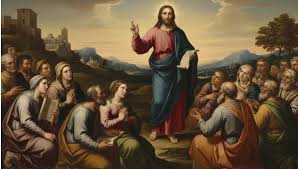
In today’s Gospel from Matthew, Jesus continues the teaching that began with the Beatitudes. He tells us plainly that we are to be “the salt of the earth” and “the light of the world.” These words speak directly to our identity and mission.

Salt preserves and gives flavor; light illumines and dispels fear. Jesus calls us to preserve the Christian spirit handed down by the first disciples and to continue sharing God’s love with the same generosity He showed. We are also called to be light for those living in darkness—especially in these confusing times—by speaking the truth and refusing to participate in anything that obscures Christ, who is the Truth and the Light.

At a deeper level, Jesus reveals that being salt and light flows from our identity as children of God. As the Gospel of John reminds us: “To those who accepted Him, He gave power to become children of God” (Jn 1:12). Our adherence to Christ demands fidelity. Our light must shine before others, not for our glory, but so that God may be glorified.

This discipleship is not lived in isolation. It is rooted in communion. Jesus told His followers before the Ascension, “You shall be my witnesses” (Acts 1:8). This calling is for everyone. Each believer bears responsibility for living out Christ’s invitation. When holiness is lived authentically, it has the power to transform many lives.

Such a communitarian identity is essential for carrying out Christ’s mission wherever we are. Mission is never individualistic; it is always lived in and with the Church.

This truth resonates deeply with my own experience. During my 19 years as a missionary in the United States, I never carried out my evangelizing mission alone. I did so in communion with the Church and with the entire Order of St. Augustine—an experience that remains fundamental to my understanding of mission.

It is also worth reflecting on Pope Leo XIV’s apostolic exhortation Dilexi Te, where he reminds us that the cry of the poor is the pathway to the heart of God. This echoes the Prophet Isaiah’s message today. Listening to the poor and to those who suffer helps us recognize our blind spots and renew our vision of Christian mission. The poor, familiar with suffering, challenge and “season” our lives, reminding us of our call to be salt and light.

Let us, therefore, preserve communion and unity in the Church, for in Christ we are one. Mission is carried out together, not by individual initiative, but in fidelity to the ecclesial community.

I urge all of us to live carefully and consciously, knowing that our lives are lived before others and that the whole world becomes the arena of our witness. We must allow our vision to be transformed, so that we may truly see differently.

May we be decisive in our choices, faithful to our Christian identity, and steadfast on our journey toward our heavenly destination.

God bless you.

Fr. Arlon, OSA