The Dictate of the Heart: 1st Sunday of Advent, Year A

Coming back to the Philippines, one thing I am surprised, christmas songs on the air I seldom hear. What is going on? Where is the spirit of Christmas in the Philippines which always begins in September? Why? I started looking back to find an answer. Not because Filipinos don’t want to begin early christmas celebration. I think Filipinos are easily overwhelmed by the negativity and darkness around us. There always seems to be some people facing rough times over the last few years with illnesses and natural disasters. Crimes, corruptions and evil deeds are performed in the darkness. I communion with many suffering filipinos from natural calamities like hurricane or typhoons, and earthquakes, aside from man-made sufferings like corruptions and political turmoil. Corruption independent investigations continuous to pervade newspaper articles.

With this kind of atmosphere darkness prevails and how can one appreciates those Christmas songs lingering on their ears? Well, they say Filipinos can easily adopt to these situations like a bamboo trees pliant and flexible. However, I believe Filipinos have an inherent attitude of advent in life, they have imbibed within them a gesture of positively waiting despite the seemingly hopelessness, a Joyous Christmas will soon come. This is exactly what is advent season all about, to be ready for the Lord’s Coming.

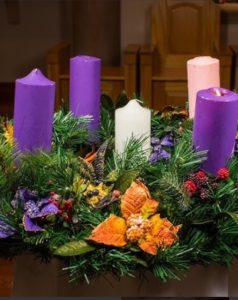
Today we celebrate the first Sunday Advent which starts the new beginning of the Church Liturgical Calendar.

The readings today would guide us to a clearer understanding of the scriptural messages to prepare our hearts for this advent season.

In the first reading from Isaiah prophesying that there will be peace, joy, and enlightenment as GOD “comes” to establish His sovereignty over all peoples, even though GOD will judge and impose terms on people, who have not given their allegiance to GOD because corruption, crimes and evil things done in the darkness. I am frightened what our future will be!

In the 2nd reading from the Letter of St. Paul to the Romans has these words to the believers of Rome and for us. St. Paul has given warning to turn to God and urging everyone to prepare to set aside all darkness we have been doing by our conversion of hearts towards the dawning of Light. Not tomorrow but right now for God fulfills His promises of salvation. The time of salvation and coming is nearer now that it has ever been revealed.

The gospel today speaks about Jesus prediction that the Son of Man will “come” at a time when some people do not expect. Those who are ready and faithful will be able to enter into the GOD’s promise of eternal salvation while those who are not prepared will be left behind. Thus, each of us need to think that being disciples of Jesus, our preparation and decision remains crucial.

I invite you to join with me to reflect on Jesus’ prediction of the destruction of Jerusalem in the year 70 AD. During those warning ㅢbelievers seem to believe the “end of the world.” However, for those faithful to Christ and are are living according
to His teachings, they are not worries and afraid for to them the end of this world is only the beginning of heaven.
What are the challenges posed to us?

First, the challenge of this season of Advent is to be ready for the Lord Jesus’ “coming.” We must work as much as we can, to cooperate with the process of turning to be ever faithful disciples of the Lord. We must be closer to Jesus Christ who is the eternal light.

St. Augustine lived this experience of leaving behind our deeds of darkness, by listening to the words of St. Paul
to the Romans, chapter 13, saying “put on the armor of Light and be clothed in Christ Jesus.” Let us not allow ourselves to be left behind when He finally comes victoriously.

Second, the challenge of this season is not to focus too much on His coming more than two thousand years ago when He came a baby in a manger, however His “coming” again is to take those who are ready into the Light of the new world that He has prepared for us. It is my realization that you ad I are more closer now than we ever have been in our meeting either at the end of time or at the moment of our death). Our focus is our continuously improving to be mindful of seeing the warming light of a new day dawning each year.

The third and last challenge of this season of Advent is to work hard cooperating with God’s grace. We must spend as much time bringing true peace and joy to others by sharing the grace we have received to decorate not only our homes and purchase gifts for family and friends but most importantly decorate ourselves with all Christian virtues in order to strive to put a little more into our living as disciples of the Lord Jesus. It means a lot of being transformed disciples of Jesus.

The time is now for us to do all we can to be to accept the gifts that GOD has given us and live a life of Light, peace, and joy. The more we live out our faith, then the more prepared we will be to make the final steps into the GOD’s house. We have still time
if we begin right now. The graciousness of God is a calling everyone to be pro-active and prepared disciples which in our genuine witnessing may help others to join us.

There are many lives succumb and yield into the dark deeds of their past. Are you ready to let go of them? What practical things can I do to bring the true sense of joy and light into the life of those who are presently experiencing darkness during this Advent? May we look forward with great expectation and hope as we realize we are about to celebrate the “coming” (adventus) of the Lord Jesus.

Maranatha, Come Lord Jesus!

Fr. Arlon, OSA


El Dictado del Corazón: Primer Domingo de Adviento, Año A

  • Isaías 2, 1–5
  • Salmo 122, 1–2. 3–4ab. 4cd–5. 6–7. 8–9
  • Romanos 13, 11–14
  • Mateo 24, 37–44 

Al regresar a Filipinas, algo me sorprendió: rara vez escuchaba villancicos en la radio. ¿Qué está pasando? ¿Dónde quedó el espíritu navideño en Filipinas, que normalmente comienza tan temprano como en septiembre? ¿Por qué está sucediendo esto? Empecé a buscar una respuesta. No es que los filipinos ya no quieran comenzar las celebraciones navideñas con anticipación. Creo que los filipinos se han visto fácilmente abrumados por la negatividad y la oscuridad que nos rodea. En los últimos años, muchos han enfrentado dificultades: enfermedades, desastres naturales, crimen, corrupción y acciones malvadas hechas en la oscuridad.

Comparto el dolor de tantos filipinos que sufren calamidades como huracanes, tifones y terremotos, así como problemas provocados por el ser humano, como la corrupción y la inestabilidad política. Las investigaciones independientes sobre corrupción continúan llenando los periódicos y todas las formas de redes sociales.

En este ambiente, parece que la oscuridad prevalece. ¿Cómo puede uno apreciar los villancicos que antes resonaban con alegría en nuestros oídos? Se dice que los filipinos son naturalmente adaptables, como el bambú, flexible y resistente. Sin embargo, creo que los filipinos también poseen una profundamente arraigada “actitud de Adviento”: un gesto propio de esperar con esperanza, incluso en medio de la aparente desesperanza, confiando en que una Navidad llena de alegría llegará sin falta. Esto es precisamente lo que significa el tiempo de Adviento: prepararnos para la venida del Señor.

Hoy celebramos el Primer Domingo de Adviento, que marca el comienzo del nuevo año litúrgico.

Las lecturas de hoy nos ayudan a comprender el mensaje bíblico que prepara nuestro corazón para este tiempo sagrado.

En la primera lectura, Isaías profetiza que llegarán la paz, la alegría y la luz cuando Dios establezca su soberanía sobre todos los pueblos, aunque Él juzgará e impondrá condiciones a quienes no le dan su fidelidad debido a la corrupción, el crimen y las obras cometidas en la oscuridad. Esto me hace temer por lo que pueda ser nuestro futuro.

En la segunda lectura, de la Carta de san Pablo a los Romanos, Pablo exhorta a los creyentes, de ayer y de hoy, a volver su corazón por completo a Dios. Nos llama a dejar atrás las obras de las tinieblas y a experimentar una conversión del corazón mientras acogemos el amanecer de la Luz. No mañana, sino ahora. Dios cumple sus promesas de salvación. El tiempo de su venida está más cerca ahora que nunca.

El Evangelio de hoy nos habla del anuncio de Jesús de que el Hijo del Hombre vendrá en un momento en que menos se le espere. Quienes estén preparados y permanezcan fieles entrarán en la promesa de salvación eterna, mientras que aquellos que no estén listos serán dejados atrás. Por eso, como discípulos de Jesús, nuestra preparación y nuestras decisiones siguen siendo fundamentales.

Los invito a reflexionar conmigo sobre la predicción de Jesús acerca de la destrucción de Jerusalén en el año 70 D.C. En aquel tiempo, los creyentes pensaron que era “el fin del mundo”. Sin embargo, quienes se mantuvieron fieles a Cristo y vivieron según sus enseñanzas no se preocuparon ni tuvieron miedo. Para ellos, el fin del mundo fue simplemente el comienzo del cielo.

¿Qué desafíos nos presenta el Adviento?

Primero, el desafío del Adviento es estar listos para la venida del Señor Jesús.

Debemos hacer todo lo posible por cooperar con la gracia de Dios, convirtiéndonos cada día en discípulos más fieles. Debemos acercarnos más a Cristo, la Luz eterna. El mismo san Agustín vivió esta experiencia, dejar atrás las obras de las tinieblas después de escuchar las palabras de san Pablo en Romanos 13: “Revístanse con las armas de la luz… revístanse del Señor Jesucristo.” No permitamos que seamos dejados atrás cuando Él venga victorioso.

Segundo, el desafío es no enfocarnos únicamente en su venida hace más de dos mil años como un niño en el pesebre. Su segunda venida tiene como fin reunir a quienes estén listos en la Luz del nuevo mundo que Él ha preparado. Me doy cuenta de que tú y yo estamos más cerca que nunca de encontrarnos con el Señor, ya sea al final de los tiempos o en el momento de nuestra muerte. Nuestro enfoque debe ser mejorar continuamente como discípulos, atentos a la luz naciente de cada nuevo día.

Tercero y último, el desafío del Adviento es trabajar arduamente en cooperación con la gracia de Dios.

Debemos dedicar tiempo a llevar verdadera paz y alegría a los demás compartiendo la gracia que hemos recibido. Decorar nuestras casas y comprar regalos tiene su valor, pero aún más importante es “decorarnos” con virtudes cristianas. Esto es lo que significa vivir como discípulos transformados de Jesús.

El momento es ahora para aceptar los dones que Dios nos ha dado y vivir vidas de luz, paz y alegría. Mientras más vivamos nuestra fe, más preparados estaremos para dar nuestros últimos pasos hacia la casa de Dios. Todavía hay tiempo, si empezamos hoy. La bondad de Dios nos llama a ser discípulos proactivos y preparados, para que mediante nuestro testimonio genuino otros se sientan animados a unirse.

Muchos hoy siguen sucumbiendo a la oscuridad de acciones pasadas. ¿Estás listo para dejarlas ir? ¿Qué cosas prácticas podemos hacer para llevar verdadera alegría y luz a quienes experimentan oscuridad en este Adviento? Que miremos hacia adelante con expectativa y esperanza mientras celebramos la venida (adventus) del Señor Jesús.

¡Maranatha!
¡Ven, Señor Jesús!

P. Arlon, OSA
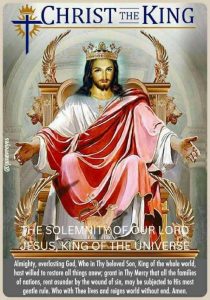
The Dictate of the Heart: The Solemnity of Christ the King, Year C

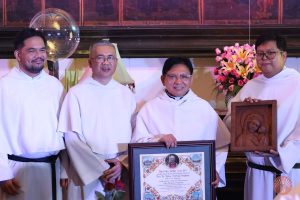
I recently had an enriching retreat with my Augustinian brothers of the Province of Santo Niño de Cebu. It had been a long time since I last joined the Augustinian Friars’ retreat—our annual moment of spiritual renewal and ongoing formation.

This year’s retreat master came from The Augustinians of the Assumption, a congregation that also embraces the Rule and teachings of St. Augustine. Fr. Bernard Holzer, AA, guided us through five themes that illuminate our calling to be “Pilgrims and Witnesses of Hope with St. Augustine.” These themes—Interiority, Community Life, the Common Good, Love for the Church, and Mission as the Passing of the Torch, renewed our enthusiasm to live as consecrated men inspired by our Holy Father Augustine. Our retreat concluded with the celebration of the Presentation of Mary, reminding us that we too are called to rededicate and renew our consecration to God.

Today, as we celebrate the final Sunday of the liturgical year—Year C—on the Solemnity of Christ the King, we see how the entire liturgical cycle leads us toward this ultimate truth: Jesus is our King.

In the first reading, from the Second Book of Samuel, we hear of the anointing of David as king, though the people did not immediately acknowledge his kingship. This echoes the experience of Jesus, the true King, who also went unrecognized by many.

The second reading, from St. Paul’s Letter to the Colossians, is a hymn proclaiming Jesus as the firstborn of all creation and the head of all things. Everything belongs to Him, yet He chooses to care for us as a shepherd cares for his flock.

The Gospel today brings us to Calvary. Even as soldiers mocked Him, the inscription above the cross still proclaimed Him “King of the Jews.” Here, the mystery of our faith shines through: on the cross, the glory of Christ’s kingship is revealed—not in power or splendor, but in humility and sacrificial love.

First, the rulers sneer at Jesus: “He saved others; let him save himself if he is the chosen one.” The soldiers, who clearly did not believe, also mock Him. Yet faith allows us to see what they could not: that the crucified Jesus is truly King and Savior. Throughout the Gospels, we encounter many such divine surprises—where the poor become rich, sinners find salvation, and the kingdom of God appears in hidden, unexpected ways.

Second, the inscription “This is the King of the Jews,” meant as ridicule, becomes a profound declaration of truth. While leaders jeer, the repentant thief recognizes Jesus as Messiah and King—and receives the promise of salvation.

Third, Jesus’ sovereignty is not about political authority, wealth, or domination. It is about love, mercy, and peace. When Jesus tells the repentant thief, “Amen, I say to you, today you will be with me in Paradise,” He reveals what God’s kingship truly means: self-giving love for the sake of all humanity. Jesus unites His people not only through His leadership but through His very person. His kingdom is built not on might, but on compassion and sacrifice.

Today’s Gospel invites each of us to make our own judgment: with the eyes of faith, can we recognize the crucified Jesus as our King?

As modern disciples, we often struggle to acknowledge Christ as King in our daily lives. Yet He continues to call us to kindness, service, forgiveness, and humble love. His greatest victory was won on the cross, where He absorbed evil and responded with mercy. And we, His followers, are called to take part in this mission—His “army,” not of force, but of love.

This feast also fills us with hope. Christ’s kingdom is not broken, divided, or temporary. It is eternal, united, and filled with peace. When we live in His love, we already begin to share in the joy of His kingdom—here and now, and in the life to come.

God bless you,

Fr. Arlon, OSA


El Dictado del Corazón
La Solemnidad de Cristo Rey, Año C

  • 2 Samuel 5, 1–3
  • Salmo 122, 1–2. 3–4. 4–5
  • Colosenses 1, 12–20
  • Lucas 23, 35–43

Hace poco tuve un retiro muy enriquecedor con mis hermanos agustinos de la Provincia del Santo Niño de Cebú. Hacía mucho tiempo que no participaba en el retiro de los frailes agustinos, nuestro momento anual de renovación espiritual y formación permanente.

El predicador de este año vino de los Agustinos de la Asunción, una congregación que también abraza la Regla y las enseñanzas de San Agustín. El P. Bernard Holzer, AA, nos guió a través de cinco temas que iluminan nuestra vocación a ser “Peregrinos y Testigos de la Esperanza con San Agustín.” Estos temas, la Interioridad, la Vida Comunitaria, el Bien Común, el Amor por la Iglesia y la Misión como el Paso de la Antorcha, renovaron nuestro entusiasmo por vivir como consagrados inspirados por nuestro Santo Padre Agustín. Nuestro retiro concluyó con la celebración de la Presentación de María, recordándonos que también nosotros somos llamados a rededicar y renovar nuestra consagración a Dios.

Hoy, al celebrar el último domingo del año litúrgico Año C en la Solemnidad de Cristo Rey, vemos cómo todo el ciclo litúrgico nos conduce a esta verdad definitiva: Jesús es nuestro Rey.

En la primera lectura, del Segundo Libro de Samuel, escuchamos la unción de David como rey, aunque el pueblo no reconoció inmediatamente su reinado. Esto refleja la experiencia de Jesús, el verdadero Rey, que también fue ignorado por muchos.

La segunda lectura, de la Carta de San Pablo a los Colosenses, es un himno que proclama a Jesús como el primogénito de toda la creación y la cabeza de todas las cosas. Todo le pertenece, y aun así Él elige cuidarnos como un pastor cuida a su rebaño.

El Evangelio de hoy nos lleva al Calvario. Aunque los soldados lo burlaban, la inscripción sobre la cruz proclamaba: “Éste es el Rey de los Judíos.” Aquí brilla el misterio de nuestra fe: en la cruz, la gloria del reinado de Cristo se revela no en poder o esplendor, sino en humildad y amor sacrificado.

Primero, los jefes del pueblo se burlan de Jesús: “A otros salvó; que se salve a sí mismo si es el elegido de Dios.” Los soldados, que claramente no creían, también se mofan de Él. Pero la fe nos permite ver lo que ellos no pudieron: que Jesús crucificado es verdaderamente Rey y Salvador. A lo largo de los Evangelios encontramos muchas de estas sorpresas divinas, donde los pobres se vuelven ricos, los pecadores encuentran salvación, y el Reino de Dios aparece de maneras ocultas e inesperadas.

Segundo, la inscripción “Éste es el Rey de los Judíos,” pensada como burla, se convierte en una profunda declaración de verdad. Mientras los líderes se mofan, el ladrón arrepentido reconoce a Jesús como Mesías y Rey, y recibe la promesa de la salvación.

Tercero, la soberanía de Jesús no se trata de autoridad política, riqueza o dominio. Se trata de amor, misericordia y paz. Cuando Jesús le dice al ladrón arrepentido: “Yo te aseguro: hoy estarás conmigo en el Paraíso,” revela lo que verdaderamente significa el reinado de Dios: un amor que se entrega por toda la humanidad. Jesús une a su pueblo no sólo a través de su liderazgo, sino por medio de su propia persona. Su Reino se edifica no con fuerza, sino con compasión y sacrificio.

El Evangelio de hoy nos invita a cada uno de nosotros a hacer nuestro propio discernimiento: con los ojos de la fe, ¿podemos reconocer al Jesús crucificado como nuestro Rey?

Como discípulos modernos, a menudo nos cuesta reconocer a Cristo como Rey en nuestra vida diaria. Sin embargo, Él continúa llamándonos a la bondad, al servicio, al perdón y al amor humilde. Su mayor victoria se logró en la cruz, donde absorbió el mal y respondió con misericordia. Y nosotros, sus seguidores, somos llamados a participar en esta misión, su “ejército,” no de fuerza, sino de amor.

Esta fiesta también nos llena de esperanza. El Reino de Cristo no está roto, dividido, ni es temporal. Es eterno, unido y lleno de paz. Cuando vivimos en su amor, ya comenzamos a participar de la alegría de su Reino, aquí y ahora, y en la vida eterna.

Dios les bendiga,

P. Arlon, OSA

The Dictate of the Heart: 33rd Sunday in Ordinary Time, Year C

My heart is filled with gratitude to God for His abundant grace bestowed upon me. God’s gift of a vocation to the Augustinian religious life is a sacred journey—one marked by grace, shaped by love, and guided by the quiet hand of God. As I look back, I am reminded of the words of the Psalmist: “The Lord has done great things for us, and we are filled with joy.” (Psalm 126:3)

Returning to the Augustinian Province of Santo Niño de Cebu after 30 years of mission work outside the country is truly a joyful reunion with my brothers.

I believe that the Augustinian community is a wellspring of inspiration and strength. Living a life in common brings joy in moments of weakness and calm in times of confusion. By God’s love, I have overcome uncertainties and challenges. God has helped me transform my wrong turns into a path leading back to Him, for He always journeys with me and has never left my side.

Today’s readings for the 33rd Sunday in Ordinary Time (Year C) remind us of the destruction of the Temple, which the Israelites believed to be a sign of the end times.

The first reading from the Book of Malachi speaks of the coming of God’s justice. The arrogant and the wicked will be chastised, while those who continue to honor God will experience His healing and will find renewed strength.

In the second reading, from St. Paul’s letter to the Thessalonians, Paul urges the community to follow his example. By remaining faithful to his Christian virtues, they will find true joy and meaning in life. Let us be encouraged to work diligently and not become a burden to others.

The Gospel from Luke narrates Jesus’ prediction of the destruction of the Temple in Jerusalem and His warning that persecution will come before the end. This message can be understood in several ways.

First, the Gospel of Luke was likely written between 80 and 90 A.D., primarily for Gentile Christians. Luke interprets the fall of Jerusalem within God’s plan for the salvation of humanity. He also suggests that there will be a significant period before Jesus’ final coming. Many at the time were anxious about signs of upheaval, but Luke encourages patience and trust.

Second, Jesus warns His followers that they will face persecution for their beliefs. However, from Luke’s perspective, persecution becomes an opportunity to bear witness to Jesus. When we are persecuted, God’s wisdom and power can be made visible through our testimony and example. Our determination to remain faithful, even in suffering, will lead us toward salvation.

Third, amid adversities and troubles, Jesus assures us that God is always present to those who follow Him.

Jesus has shown this through His own life, His sacrifices, and His death on the Cross. He teaches us to place our full trust in God’s mercy and consolation.

This Gospel passage offers a message of hope: despite persecution and turmoil, believers will be protected by God.

Let us, then, heed the call to perseverance and keep our focus on God despite chaos and uncertainty. True security is found in remaining faithful to the Gospel and clinging to Christ.

As we enter this jubilee year, the message is clear: stay faithful, listen to God’s warnings, and trust that healing will come like the rising sun. Stay focused, persevere in faith, remain steadfast, and trust God in all trials and challenges.

Ultimately, we should not be afraid. What is important is that we bear witness until the end. The “end” is not destruction but the unveiling of the reality of Jesus’ Resurrection. Therefore, we are reminded not to place our ultimate trust in worldly things but in God and in what is eternal. Our faith will help us endure all things.

God bless you.

Fr. Arlon, OSA


El Dictado del Corazón: Trigésimo-tercer Domingo del Tiempo Ordinario, Año C

  • Malaquías 3, 19–20
  • Salmo 98, 5–6. 7–9
  • 2 Tesalonicenses 3, 7–12
  • Lucas 21, 5–19

Mi corazón está lleno de gratitud a Dios por Su abundante gracia derramada sobre mí. El don de Dios de una vocación a la vida religiosa agustiniana es un camino sagrado, marcado por la gracia, moldeado por el amor y guiado por la mano silenciosa de Dios. Al mirar hacia atrás, recuerdo las palabras del salmista: “El Señor ha estado grande con nosotros, y estamos alegres.” (Salmo 126, 3)

Regresar a la Provincia Agustiniana del Santo Niño de Cebú después de 30 años de trabajo misionero fuera del país es verdaderamente un gozoso reencuentro con mis hermanos.

Creo que la comunidad agustina es una fuente de inspiración y fortaleza. Vivir una vida en común trae alegría en los momentos de debilidad y calma en tiempos de confusión. Por el amor de Dios he superado incertidumbres y desafíos. Dios me ha ayudado a convertir mis desvíos en un camino que me lleva de regreso a Él, porque Él siempre camina conmigo y nunca me ha dejado solo.

Las lecturas de hoy para el Trigésimo-tercer Domingo del Tiempo Ordinario (Año C) nos recuerdan la destrucción del Templo, que los Israelitas consideraban un signo de los últimos tiempos.

La primera lectura del libro de Malaquías habla de la llegada de la justicia de Dios. Los soberbios y los malvados serán castigados, mientras que aquellos que siguen honrando a Dios experimentarán Su sanación y encontrarán nuevas fuerzas.

En la segunda lectura, de la carta de San Pablo a los Tesalonicenses, Pablo exhorta a la comunidad a seguir su ejemplo. Al permanecer fieles a sus virtudes cristianas, encontrarán la verdadera alegría y el sentido de la vida. Que nos animemos a trabajar con diligencia y a no convertirnos en una carga para los demás.

El Evangelio de Lucas narra la predicción de Jesús sobre la destrucción del Templo de Jerusalén y Su advertencia de que la persecución llegará antes del final. Este mensaje puede entenderse de varias maneras.

Primero, el Evangelio de Lucas probablemente fue escrito entre los años 80 y 90 d.C., principalmente para cristianos gentiles. Lucas interpreta la caída de Jerusalén dentro del plan de Dios para la salvación de la humanidad. También sugiere que habrá un periodo significativo antes de la venida final de Jesús. Muchos en ese tiempo estaban ansiosos por los signos de agitación, pero Lucas los anima a tener paciencia y confianza.

Segundo, Jesús advierte a Sus seguidores que enfrentarán persecución por sus creencias. Sin embargo, desde la perspectiva de Lucas, la persecución se convierte en una oportunidad para dar testimonio de Jesús. Cuando somos perseguidos, la sabiduría y el poder de Dios pueden hacerse visibles a través de nuestro testimonio y nuestro ejemplo. Nuestra determinación de permanecer fieles, incluso en el sufrimiento, nos llevará a la salvación.

Tercero, en medio de adversidades y dificultades, Jesús nos asegura que Dios siempre está presente para quienes lo siguen.

Jesús lo ha mostrado con Su propia vida, Sus sacrificios y Su muerte en la Cruz. Nos enseña a poner toda nuestra confianza en la misericordia y la consolación de Dios.

Este pasaje del Evangelio nos ofrece un mensaje de esperanza: a pesar de la persecución y la turbulencia, los creyentes serán protegidos por Dios.

Escuchemos, entonces, el llamado a la perseverancia y mantengamos nuestra mirada en Dios, a pesar del caos y la incertidumbre. La verdadera seguridad se encuentra en permanecer fieles al Evangelio y aferrarnos a Cristo.

Al entrar en este año jubilar, el mensaje es claro: permanezcan fieles, escuchen las advertencias de Dios y confíen en que la sanación llegará como el sol naciente. Manténganse enfocados, perseveren en la fe, permanezcan firmes y confíen en Dios en todas las pruebas y desafíos.

En última instancia, no debemos tener miedo. Lo importante es que demos testimonio hasta el final. El “final” no es destrucción, sino la manifestación de la realidad de la Resurrección de Jesús. Por lo tanto, se nos recuerda que no debemos poner nuestra confianza última en las cosas del mundo, sino en Dios y en lo que es eterno. Nuestra fe nos ayudará a soportar todas las cosas.

Que Dios los bendiga.

P. Arlon, OSA

The Dictate of the Heart: Feast of the Dedication of the Lateran Basilica and the 32nd Sunday in Ordinary Time, Year C

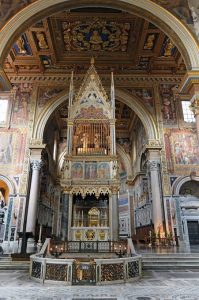
Today, we celebrate the Feast of the Dedication of the Lateran Basilica. This celebration symbolizes our unity as Catholics. We are united with the Bishop of Rome in commemorating the dedication of the first official Church, known as the Mother of All Churches—St. John Lateran. Built by Emperor Constantine on the Lateran Hill, it serves as the Pope’s main church, not St. Peter’s Basilica. Today marks a special moment in the history of Christianity.

In the first reading, the prophet Ezekiel recounts his vision of being led by an angel into the temple in Jerusalem. There, he witnesses life-giving water flowing from the temple—an image of God’s blessing and presence that brings life and renewal.

In the second reading, St. Paul reminds the Corinthians that they themselves are the living temple of God, built upon the foundation of Jesus Christ. This temple is not made of lifeless stones but of living, Spirit-filled people, with Christ Himself as its cornerstone.

In the Gospel, taken from St. John, Jesus cleanses the temple because it is the house of God. Yet, this temple is not merely a physical structure—it represents the people of God, His Body. Jesus desires to purify this temple, for it is not only made of stone but animated by the Spirit of God dwelling within each person.

As I reflect on the readings, I found three important lessons from this Sunday’s Gospel.

First, the new temple of God is not made by human hands but by God Himself, with Jesus as its foundation. This temple is the universal Church—the people of God—the true and living dwelling place of the Lord, His Mystical Body.

Second, some may question Jesus’ actions toward the merchants in the temple. However, His anger was not rooted in malice or violence, but in holy zeal and righteous frustration. The people had desecrated the sacred place where God’s presence was meant to dwell. Jesus was asserting His divine authority to cleanse and restore the temple as a place of encounter with God.

Scripture tells us that if the temple were destroyed, Jesus would raise it again in three days. This prophecy points to His resurrection—the creation of a new, eternal, and perfect temple: His risen Body.

Third, today’s feast invites us to recognize that we are the new temple of God. It is an opportunity to rededicate ourselves, renewing our consecration to God as His living and holy presence on earth. What a great joy it is that God chooses to dwell within us—to make His home in us, to strengthen us, to help us, to fill us with His joy, and to make our joy complete.

When we fail to respect one another, we desecrate the Church itself. Darkness takes the place of light. In such moments, we are called to reparation—to change our hearts and renew our perspective. Jesus’ resurrection changes everything; it reveals that we are God’s living temples, where the Risen Lord, together with the Father and the Holy Spirit, truly dwells.

Let us ask ourselves:

How can I better reflect God’s presence to others? What do I truly think about the Church today?

Always be mindful that, as the living Body of Christ, we need the three E’s: Ecclesial, which means we are in communion with Jesus; Eucharistic, which means not merely celebrating the Mass but sharing Christ’s Body and Blood with a willingness to serve and sacrifice; and finally, Evangelium, which means that as disciples, we not only hear the Word of God but also live it out in word and deed.

May God dwell within us always, for He desires to be in a living relationship with each of us. 

God bless you,

Fr. Arlon, OSA


El Dictado del Corazón: Fiesta de la Dedicación de la Basílica de Letrán y el 32º Domingo del Tiempo Ordinario, Año C

  • Ezequiel 47, 1–2.8–9.12
  • Salmo 45, 2–3.5–6.8–9
  • 1 Corintios 3, 9c–11.16–17
  • Juan 2, 13–22

Hoy celebramos la Fiesta de la Dedicación de la Basílica de Letrán. Esta celebración simboliza nuestra unidad como católicos. Nos unimos al Obispo de Roma para conmemorar la dedicación de la primera iglesia oficial, conocida como la Madre de todas las Iglesias, San Juan de Letrán. Construida por el emperador Constantino en la colina de Letrán, esta basílica es en realidad la iglesia principal del Papa, no la de San Pedro. Hoy recordamos un momento muy especial en la historia del cristianismo.

En la primera lectura, el profeta Ezequiel nos relata su visión de ser guiado por un ángel al templo de Jerusalén. Allí contempla cómo brota agua viva del templo, imagen de la bendición y la presencia de Dios, que da vida y renovación.

En la segunda lectura, san Pablo recuerda a los corintios que ellos mismos son el templo vivo de Dios, edificado sobre el fundamento que es Jesucristo. Este templo no está hecho de piedras sin vida, sino de personas vivas, llenas del Espíritu, con Cristo mismo como piedra angular.

En el Evangelio según san Juan, Jesús purifica el templo porque es la casa de Dios. Sin embargo, este templo no es solo una estructura física: representa al pueblo de Dios, su Cuerpo. Jesús desea purificar este templo, pues no está hecho únicamente de piedra, sino animado por el Espíritu de Dios que habita en cada persona.

Al reflexionar sobre las lecturas, encontré tres enseñanzas importantes en el Evangelio de este domingo:

Primero, el nuevo templo de Dios no está hecho por manos humanas, sino por el mismo Dios, con Jesús como su fundamento. Este templo es la Iglesia universal, el pueblo de Dios, la verdadera y viva morada del Señor, su Cuerpo Místico.

Segundo, algunos podrían cuestionar las acciones de Jesús contra los comerciantes en el templo. Sin embargo, su enojo no nace de la malicia ni de la violencia, sino del celo santo y de la justa indignación. El pueblo había profanado el lugar sagrado donde debía habitar la presencia de Dios. Jesús afirma su autoridad divina al limpiar y restaurar el templo como un lugar de encuentro con Dios.

La Escritura nos dice que si el templo fuera destruido, Jesús lo levantaría de nuevo en tres días. Esta profecía se refiere a su resurrección, la creación de un templo nuevo, eterno y perfecto: su Cuerpo resucitado.

Tercero, la fiesta de hoy nos invita a reconocer que nosotros somos el nuevo templo de Dios. Es una oportunidad para rededicarnos, renovando nuestra consagración a Dios como su presencia viva y santa en la tierra. ¡Qué alegría tan grande saber que Dios elige habitar en nosotros! Que quiere hacer su morada en nuestro corazón, fortalecernos, ayudarnos, llenarnos de su gozo y hacer pleno nuestro gozo.

Cuando dejamos de respetarnos unos a otros, profanamos la misma Iglesia. La oscuridad toma el lugar de la luz. En esos momentos, estamos llamados a la reparación, a cambiar el corazón y renovar nuestra mirada. La resurrección de Jesús lo cambia todo; nos revela que somos templos vivos de Dios, donde el Señor Resucitado, junto con el Padre y el Espíritu Santo, verdaderamente habita.

Preguntémonos:

¿Cómo puedo reflejar mejor la presencia de Dios a los demás?

¿Qué pienso verdaderamente de la Iglesia hoy?

Siempre tengamos presente que, como Cuerpo vivo de Cristo, necesitamos las tres E: Eclesial, que significa que estamos en comunión con Jesús; Eucarística, que significa no solo celebrar la Misa sino compartir el Cuerpo y la Sangre de Cristo con voluntad de servir y sacrificarnos; y finalmente, Evangelium, que significa que, como discípulos, no solo escuchamos la Palabra de Dios sino que también la vivimos de palabra y obra.

Que Dios habite siempre en nosotros, pues Él desea tener una relación viva con cada uno de nosotros.

Dios los bendiga,

P. Arlon, OSA

The Dictate of the Heart: Commemoration of All the Faithful Departed (All Souls’ Day) / 31st Sunday in Ordinary Time, Year C

Today, within the 31st Sunday in Ordinary Time, the universal Church commemorates the Solemnity of All Souls’ Day. This is a day we hold close to our hearts as we remember our beloved departed—those who have gone before us marked with faith. We remember them with love, holding on to the hope and promise of the resurrection.

In our responsorial psalm, we hear the comforting words: “Though I walk in the valley of darkness, I fear no evil, for you are with me.” (Psalm 23:4).  In these times of uncertainty—amid political unrest, economic hardship, and global conflicts—it often feels like we are walking through that valley ourselves. Many are unsettled and anxious, groping in the darkness of despair, unsure of where to turn. Yet, the readings today remind us that there is nothing to fear—not even destruction, not even death.

In the first reading from the Book of Wisdom, we are reassured: “The souls of the just are in the hand of God, and no torment shall touch them.” (Wisdom 3:1)
Though death often brings sorrow and shock, the souls of the faithful departed are at peace in God’s hands. That same peace is what we seek today as we pray for our loved ones, trusting that they are journeying toward the fullness of God’s kingdom.

The second reading, from St. Paul’s Letter to the Romans, speaks of the newness of life. Through baptism, we are united with Christ in His death and resurrection: “If we have died with Christ, we shall also live with Him.” (Romans 6:8)  This is our hope and reality as followers of Christ—to live in love and to trust in the eternal life He promises. St. Paul reminds us: “Just as Christ was raised from the dead by the glory of the Father, we too might live in newness of life.” (Romans 6:4)

In the Gospel of St. John, Jesus proclaims a truth both profound and consoling: “This is the will of my Father, that everyone who sees the Son and believes in Him may have eternal life, and I shall raise him on the last day.” (John 6:40)
This promise is deeply personal. It assures us that Jesus looks upon each of us with compassion, mercy, and love.

I recall during the pandemic, many people felt anger and grief toward God after losing loved ones. Some could not even give their final goodbyes or pay their last respects. Death often brings pain and questions—Why did this happen? Why them? Why now? Yet, as disciples of the risen Lord, we believe that death has no power over us anymore. Death is not the end. Christ has gone before us to prepare a place in the Father’s house, where we will share in the joy of eternal life promised to us by Jesus Himself.

Seen through the lens of God’s infinite love, even our time here on earth becomes a mission—to live courageously, to share the Good News, and to witness to the hope of the resurrection by the example of our lives.

Let us, then, change our perspective on death. It is not something morbid or fearful, but rather a passage—a doorway to new life. Reflecting on death helps us appreciate the brevity and preciousness of life. Even if one lives into their nineties, life remains fleeting.

As we commemorate All Souls’ Day, let us continue to pray for our beloved dead. May the Holy Spirit comfort us in our grief and grant us peace in the hope of eternal life.

Eternal rest grant unto them, O Lord, and let perpetual light shine upon them.

May they rest in peace. Amen.

Fr. Arlon, OSA


El Dictado del Corazón: Conmemoración de Todos los Fieles Difuntos (Día de los Fieles Difuntos) / XXXI Domingo del Tiempo Ordinario, Año C

  • Sabiduría 3:1-9
  • Salmo 23:1-6
  • Romanos 6:3-9
  • Juan 6:37-40

Hoy, dentro del XXXI Domingo del Tiempo Ordinario, la Iglesia universal conmemora la Solemnidad de Todos los Fieles Difuntos. Es un día que llevamos muy cerca del corazón, pues recordamos a nuestros seres queridos que han partido antes que nosotros, marcados por la fe. Los recordamos con amor, aferrándonos a la esperanza y a la promesa de la resurrección.

En nuestro salmo responsorial escuchamos las palabras que tanto consuelo traen:  “Aunque camine por cañadas oscuras, nada temo, porque tú vas conmigo.” (Salmo 23:4)   En estos tiempos de incertidumbre, en medio de la agitación política, las dificultades económicas y los conflictos mundiales, a menudo sentimos que nosotros mismos caminamos por ese valle. Muchos se sienten inquietos y angustiados, buscando en la oscuridad del desaliento, sin saber hacia dónde dirigirse. Sin embargo, las lecturas de hoy nos recuerdan que no hay nada que temer, ni la destrucción, ni siquiera la muerte.

En la primera lectura, del Libro de la Sabiduría, encontramos una promesa llena de esperanza:  “Las almas de los justos están en las manos de Dios, y ningún tormento las alcanzará.” (Sabiduría 3:1)  Aunque la muerte suele traer tristeza y conmoción, las almas de los fieles difuntos descansan en paz en las manos de Dios. Esa misma paz es la que buscamos hoy al orar por nuestros seres queridos, confiando en que caminan hacia la plenitud del Reino de Dios.

La segunda lectura, de la Carta de san Pablo a los Romanos, nos habla de la novedad de la vida. Por el bautismo, hemos sido unidos a Cristo en su muerte y resurrección:  “Si hemos muerto con Cristo, creemos que también viviremos con Él.” (Romanos 6:8)  Esta es nuestra esperanza y nuestra realidad como seguidores de Cristo: vivir en el amor y confiar en la vida eterna que Él nos promete. San Pablo nos recuerda:  “Así como Cristo fue resucitado de entre los muertos por la gloria del Padre, así también nosotros andemos en una vida nueva.” (Romanos 6:4)

En el Evangelio según san Juan, Jesús proclama una verdad profunda y consoladora:  “Ésta es la voluntad de mi Padre: que todo el que vea al Hijo y crea en Él tenga vida eterna, y Yo lo resucitaré en el último día.” (Juan 6:40)
Esta promesa es profundamente personal. Nos asegura que Jesús nos mira a cada uno con compasión, misericordia y amor.

Recuerdo que durante la pandemia, muchas personas sintieron enojo y dolor hacia Dios al perder a sus seres queridos. Algunos ni siquiera pudieron despedirse ni ofrecer un último adiós. La muerte trae dolor y preguntas: ¿Por qué pasó esto? ¿Por qué ellos? ¿Por qué ahora?
Sin embargo, como discípulos del Señor resucitado, creemos que la muerte ya no tiene poder sobre nosotros. La muerte no es el final. Cristo ha ido delante de nosotros para prepararnos un lugar en la casa del Padre, donde compartiremos la alegría de la vida eterna que Él mismo nos ha prometido.

Vista a través del lente del amor infinito de Dios, incluso nuestra vida terrenal se convierte en una misión: vivir con valentía, anunciar la Buena Nueva y dar testimonio de la esperanza de la resurrección con el ejemplo de nuestras vidas.

Cambiemos, entonces, nuestra perspectiva sobre la muerte. No es algo macabro o temible, sino un paso, una puerta hacia la vida nueva. Reflexionar sobre la muerte nos ayuda a valorar la brevedad y la preciosidad de la vida. Aun si alguien vive hasta los noventa años, la vida sigue siendo fugaz.

Al conmemorar el Día de los Fieles Difuntos, continuemos orando por nuestros seres queridos que han partido. Que el Espíritu Santo nos consuele en nuestro duelo y nos conceda paz en la esperanza de la vida eterna.

Concédeles, Señor, el descanso eterno, y brille para ellos la luz perpetua.

Que descansen en paz. Amén.

P. Arlon, OSA